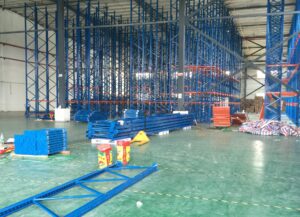
In modern industrial logistics and production scenarios, the efficiency of warehousing and material flow directly determines an enterprise’s supply chain response speed and cost control capability. Industrial auxiliary equipment such as metal turnover containers and custom built equipment frames, featuring high load bearing capacity, reusability and strong adaptability, have become core enablers for optimizing warehouse layout and improving material handling efficiency.
I. Industrial Metal Equipment: Role Upgrade from “Tools” to “System Nodes”
Traditionally, warehouse metal racks and turnover containers were regarded merely as “shelves for storing goods”. Against the backdrop of lean production and smart warehousing, however, such equipment has evolved into critical nodes for unit based material management, workshop side logistics connection and space utilization improvement.
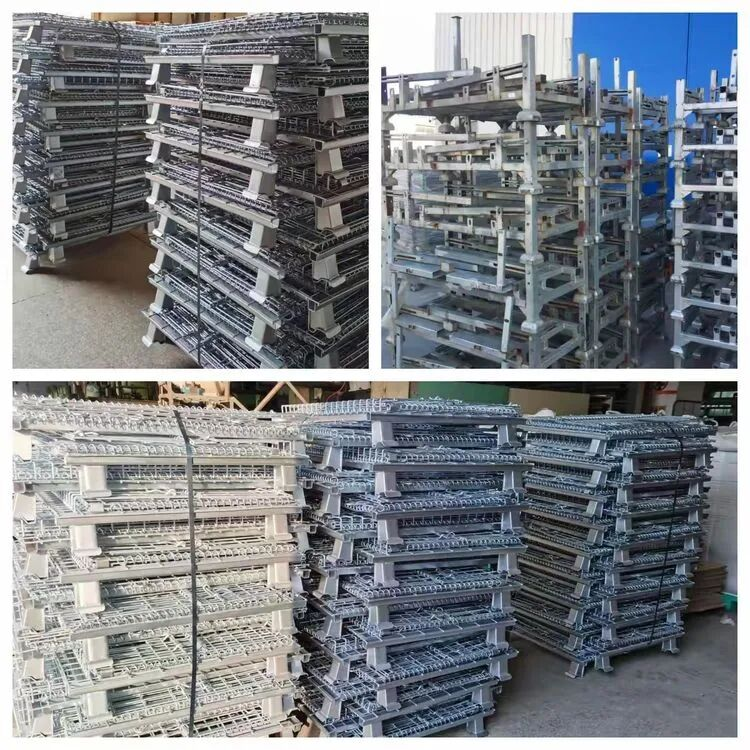
1.Wire Mesh Cages: Manufactured with galvanized steel wire via welding and designed for stacking, each cage can bear 800 1500 kg. Compatible with forklifts and stackers, they support integrated material flow covering ground storage, rack storage and transportation. They are particularly suitable for storing and transporting small batch, multi variety parts such as auto components and electronic components. When folded empty, they occupy only 1/5 of the space required for loaded cages, greatly cutting back haul logistics costs.
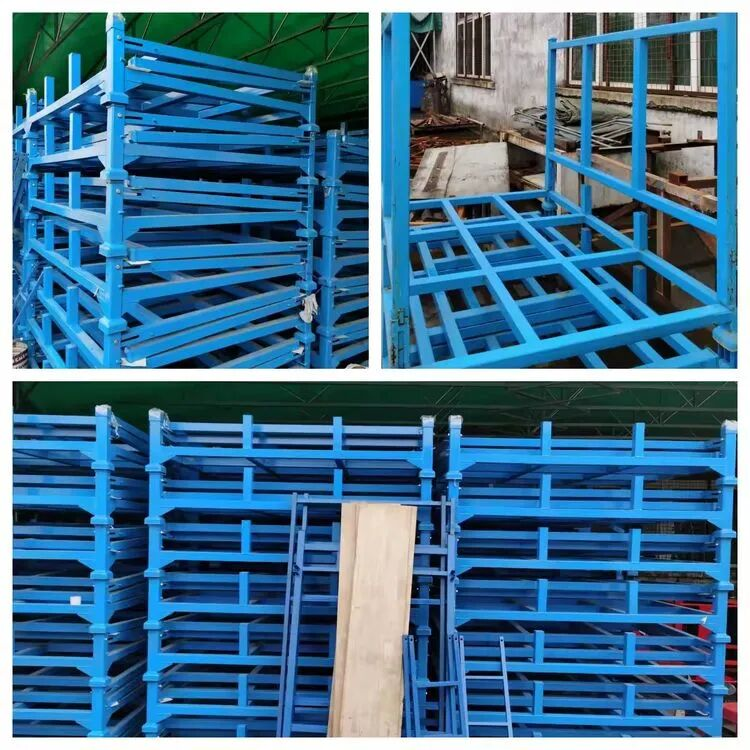
2.Stackable Turnover Racks: Equipped with standard feet and positioning structures for stable multi layer stacking (typically 4 6 layers). Custom internal partitions can be added to store special shaped workpieces, moulds and semi finished products. Compared with the conventional pallet plus carton solution, material damage rates drop by more than 90%. These racks also allow RFID tag installation, providing hardware support for digital warehouse management.
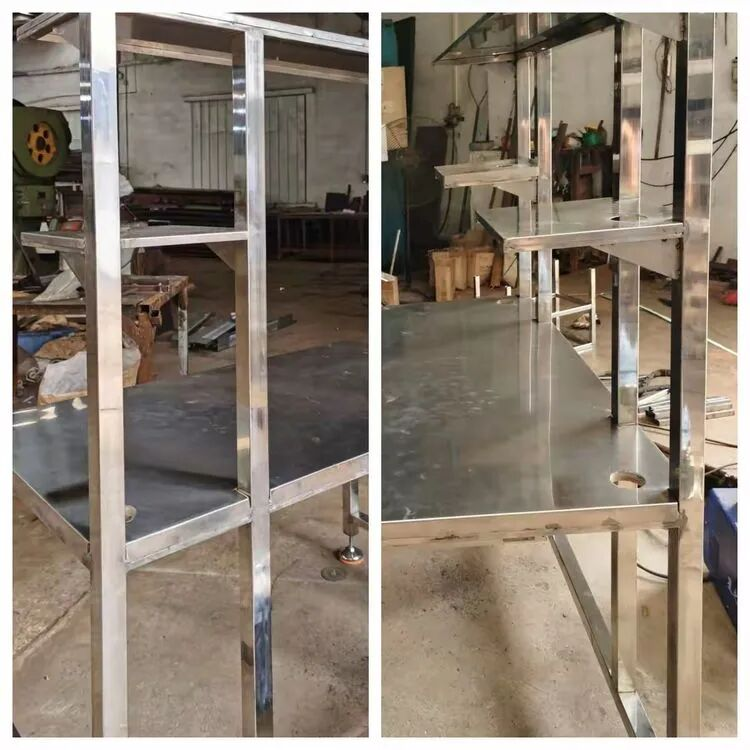
3.Custom Built Equipment Frames: Fabricated from 304/316 stainless steel or carbon steel through laser cutting and precision welding, they deliver outstanding corrosion resistance and structural stability. Widely used for equipment supports and workstations in clean environments such as food processing and pharmaceutical production. Some frames are fitted with swivel castors and levelling feet to satisfy both fixed position operation and flexible relocation requirements.
II. Key Selection Principles: Match Scenario Requirements and Balance Cost and Value
When selecting metal equipment, enterprises shall conduct thorough assessment from three dimensions: material characteristics, material handling workflows and site conditions.
1.Load bearing Capacity and Compatibility: For heavy duty materials (e.g. castings and metal profiles), carbon steel welded stackable racks with reinforced legs are preferred. For light weight precision components (e.g. semiconductor parts), powder coated or galvanized wire mesh cages are recommended to prevent surface scratches and rust.
2.Space Utilization: Warehouses with large inventory volumes should prioritize stackable and foldable turnover containers. When used with high bay racks, vertical space utilization can be increased by 200%. Custom built equipment frames work well for workshop side stations; multi tier storage and equipment embedding designs reduce production floor footprint.
3.Full Life Cycle Cost: Although metal equipment carries higher upfront procurement costs than plastic or wooden containers, over a 10 year service cycle it achieves a repair rate ≤ 5 % and can be reused ≥ 5000 times, far outperforming alternatives. Overall costs can be reduced by over 40%. In addition, metal products are recyclable upon end of life, complying with green supply chain standards.
III. Industry Practice: How Metal Equipment Improves Warehouse Efficiency
A case study of an auto parts manufacturer illustrates the benefits. The company previously stored components on wooden pallets in cartons, which led to damp goods, handling damage and space waste. After adopting galvanized wire mesh cages and stackable racks, three major improvements were achieved:
1.Warehouse space occupation cut by 60 %, and storage capacity per unit area increased to 2.5 times the original level.
2.Material handling workflows simplified from “manual sorting carton packing pallet stacking” to “in cage sorting direct stacking”. The processing time for each batch of materials decreased by 40 %.
3.Annual material loss costs reduced by 100,000$. The investment in equipment frames and turnover containers was recouped within 18 months.
Going beyond their basic function of holding goods, metal turnover containers and custom frames have transformed from simple storage tools into efficiency driving components of supply chains. They serve as key infrastructure for industrial enterprises pursuing lean, digital and cost effective operations. When designing warehousing and logistics systems, enterprises should include the selection and deployment of such equipment as a core part of supply chain optimization, and boost operational efficiency through hardware upgrades.
Storlogi beam racking offers high load-bearing, flexible adjustment, and integrated warehouse solutions, boosting efficiency and unlocking space value for manufacturing, e-commerce, and cold chain industries.
In modern warehousing systems, the handling characteristics and inventory scale of different goods determine the selection of suitable racking systems. When enterprises are faced with large volume of single-SKU inventory, fixed turnover patterns ...
Discover how StorLogi revolutionized warehousing by upgrading traditional racks into smart shelving through hardware innovation, seamless WMS integration, and customer-driven product iteration—boosting efficiency, safety, and sustainability.
 StorLogi