Drive-in Racks: Planning & Application Guide for Bulk Warehousing
In modern warehousing systems, the handling characteristics and inventory scale of different goods determine the selection of suitable racking systems. When enterprises are faced with large volume of single-SKU inventory, fixed turnover patterns and limited warehouse space, conventional pallet racks often fail to maximize space efficiency. As a customized warehousing structure for high-volume goods, drive-in racks are far more than a simple type of racking equipment. They serve as an integrated warehousing solution that combines layout planning, operational procedures and safety management.
I. Application Logic and Limitations of Drive-in Racks
There is a wide variety of racking products on the market. The primary principle for choosing drive-in racks is to align them with goods types, inventory volume and operational modes. Blind selection will easily lead to space waste, reduced efficiency and even potential safety hazards. Below is a clear overview of its core application scenarios and usage restrictions.
- Core Application Scenarios
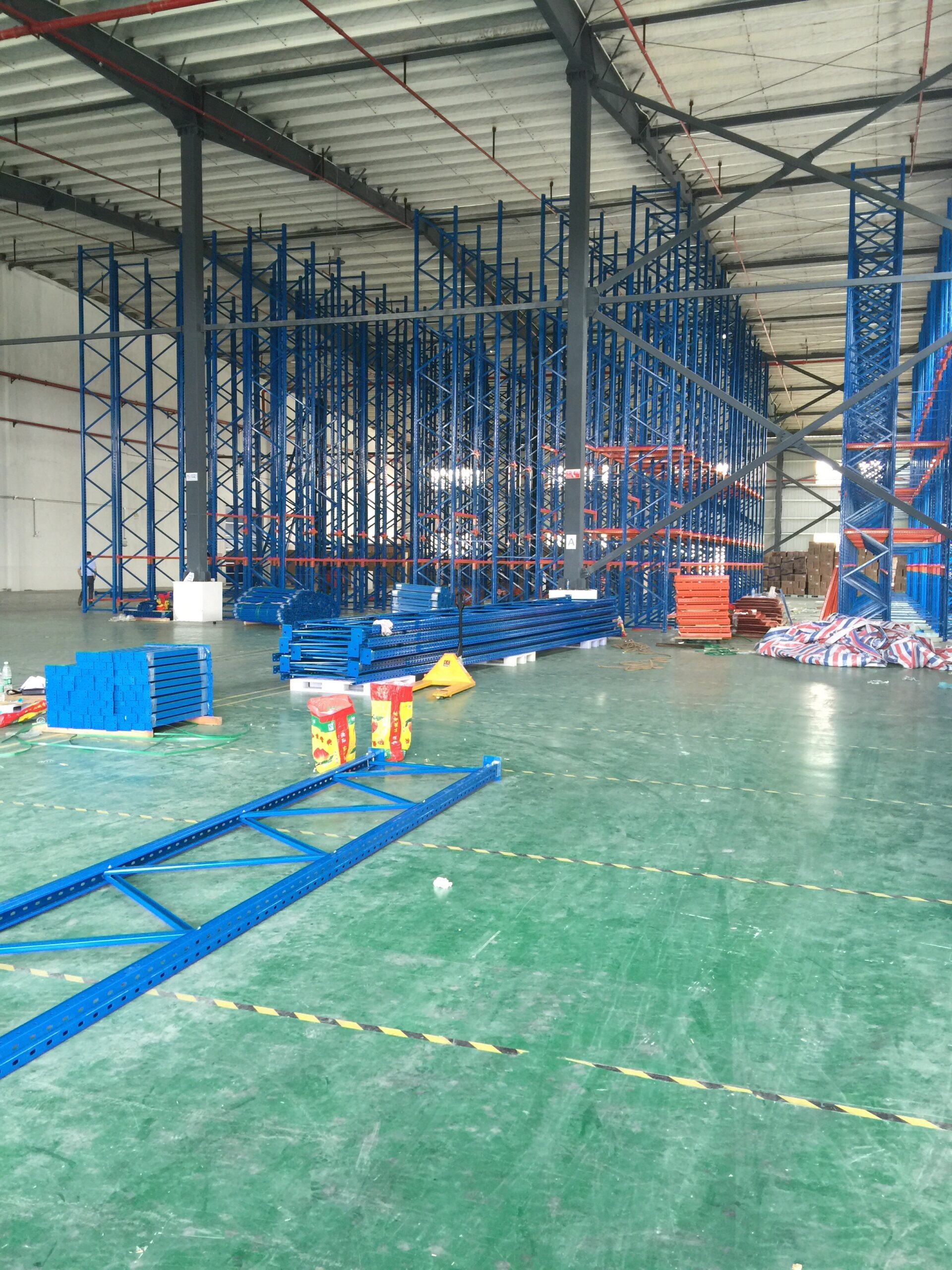
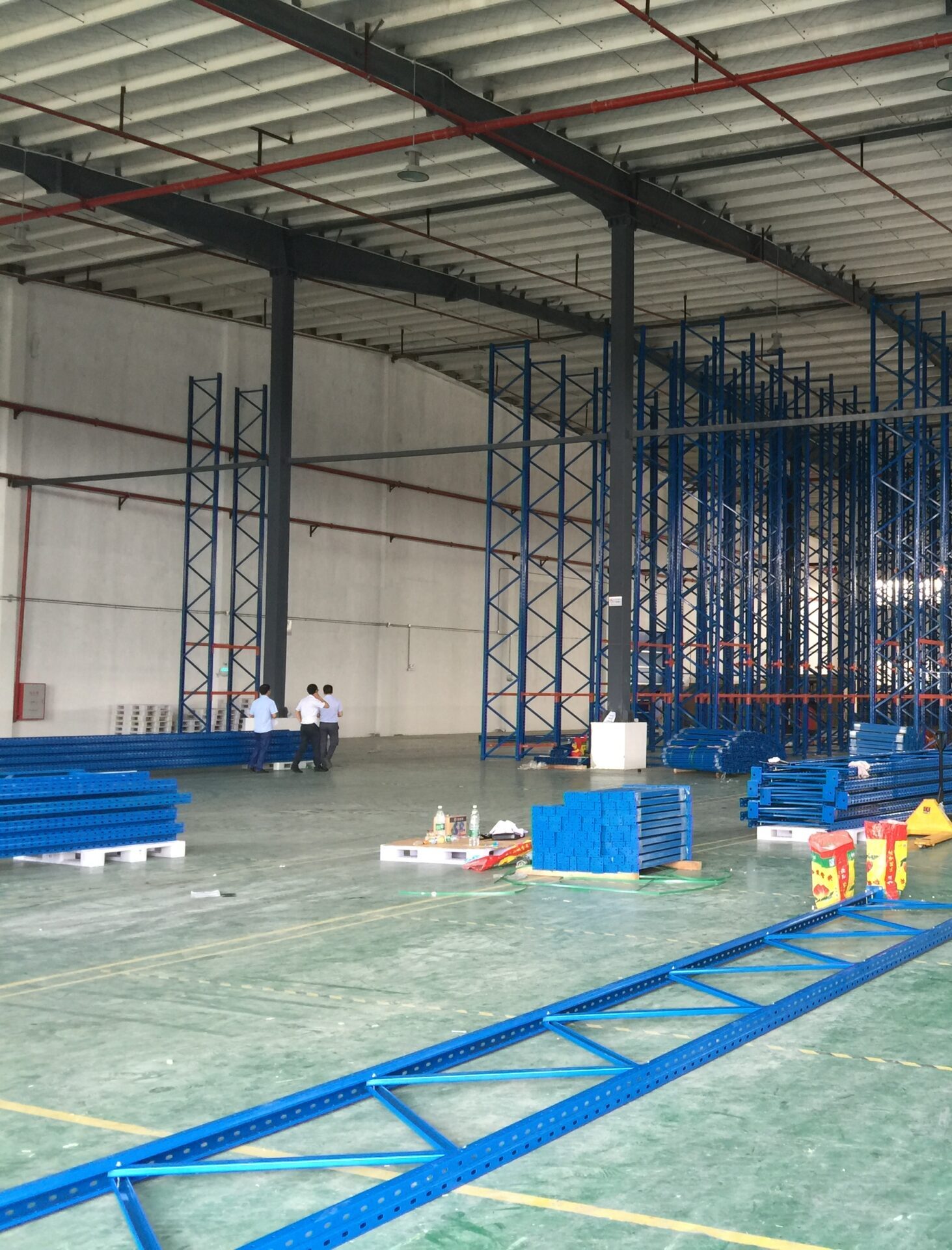
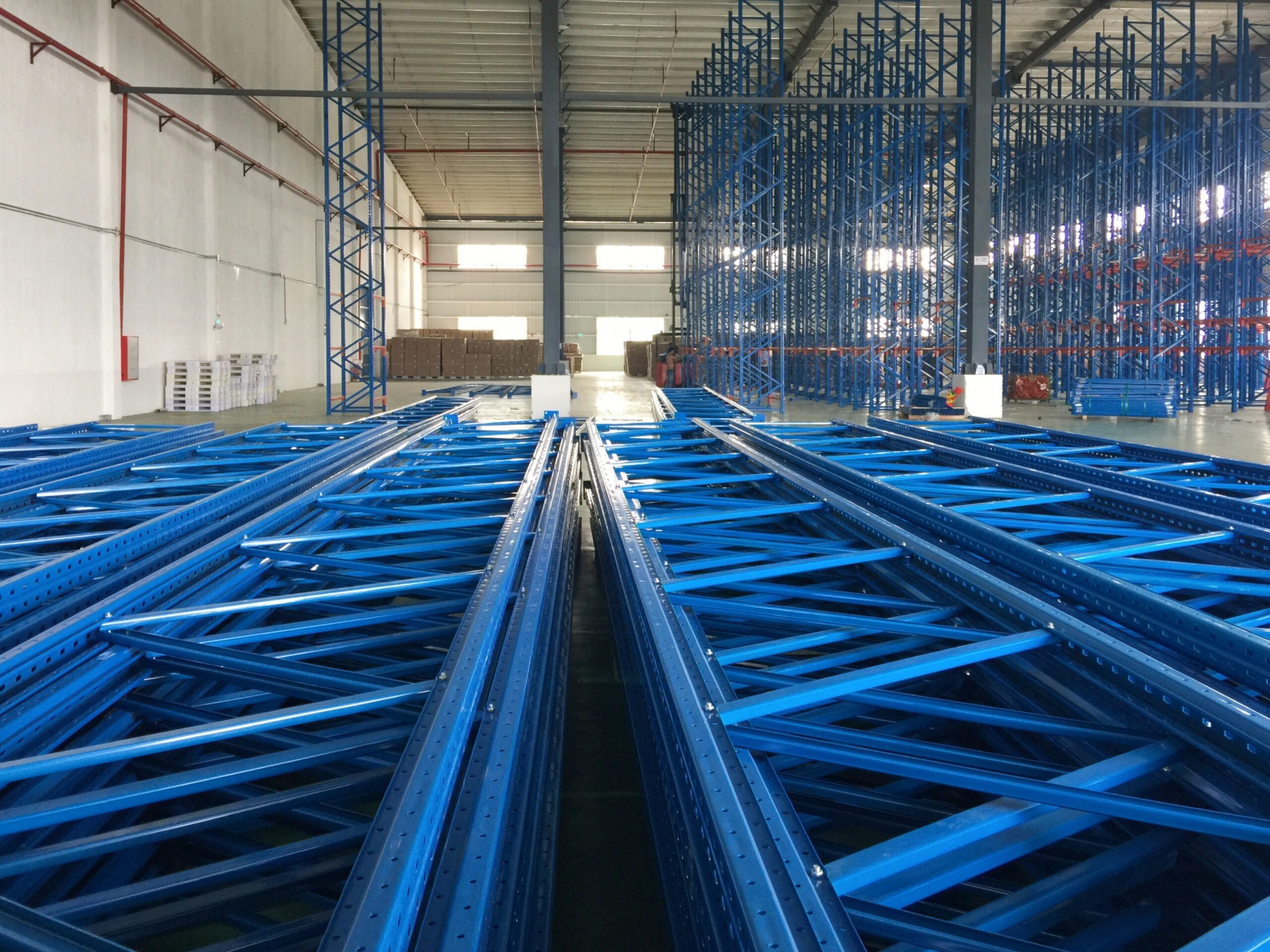
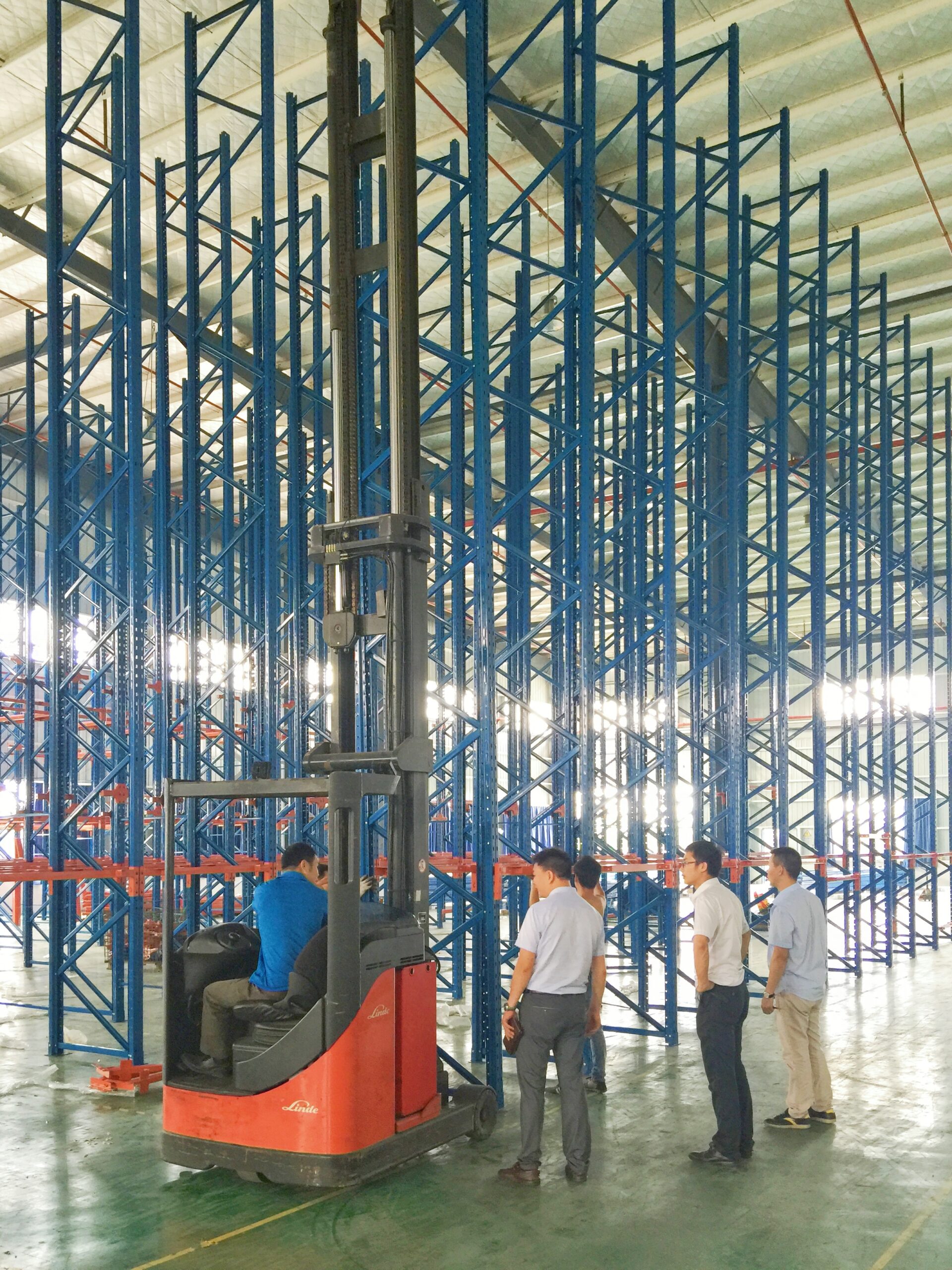
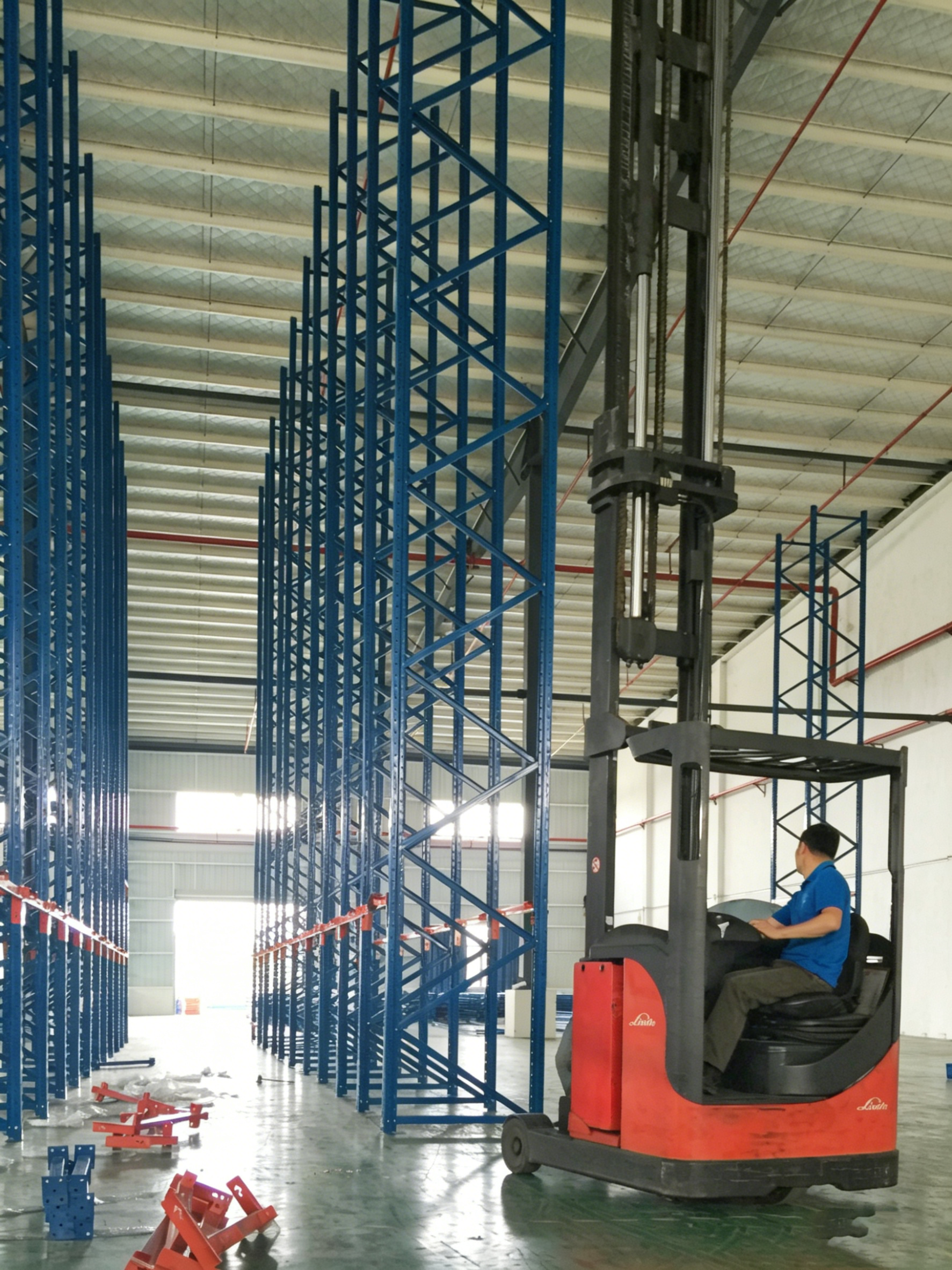
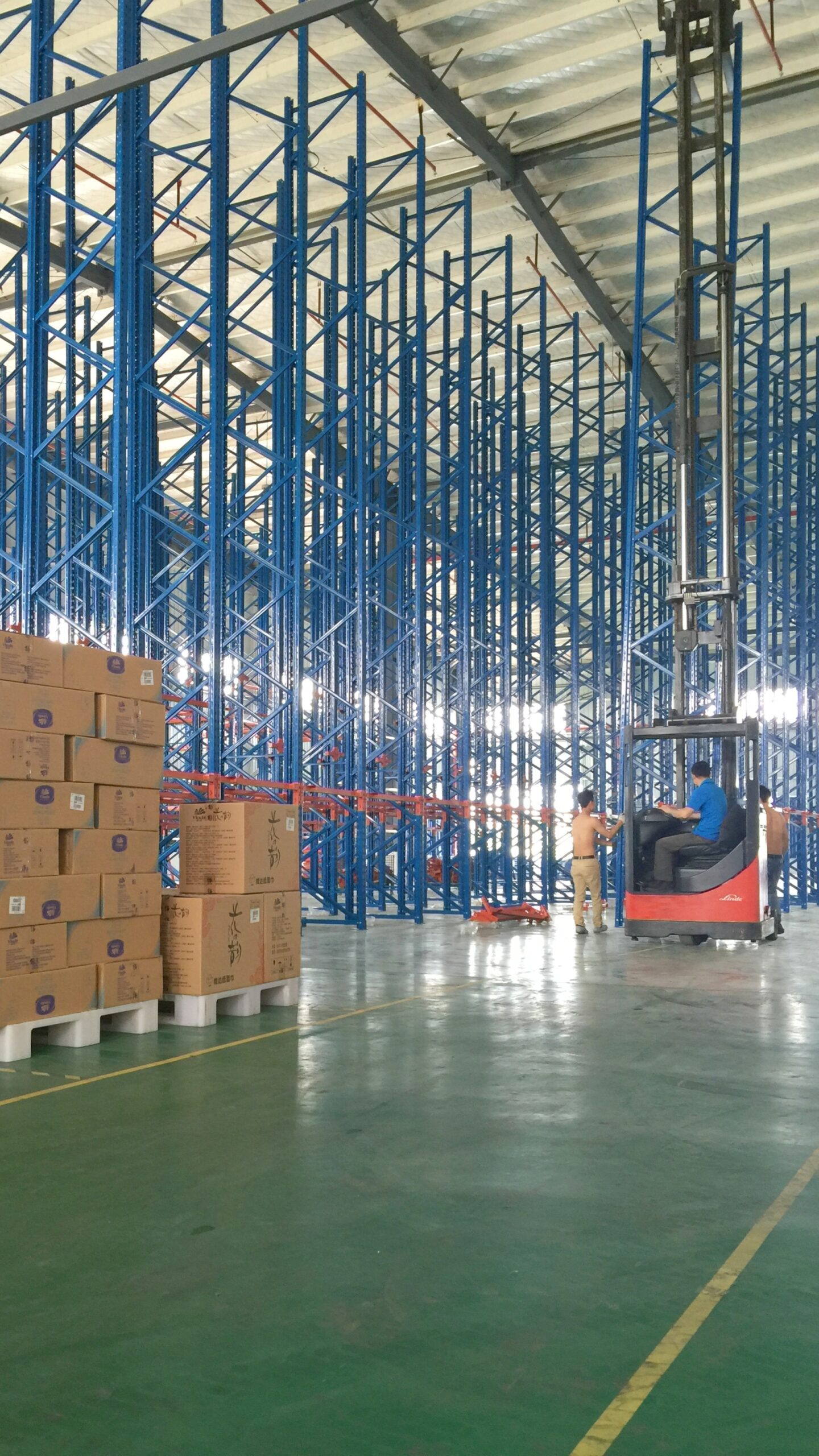
Drive-in racks feature interconnected aisles without individual separate storage bays, allowing forklifts to drive deep into the aisles for loading and unloading. They are ideally designed for warehousing operations with fewer SKUs, large batch quantities and full-pallet handling.
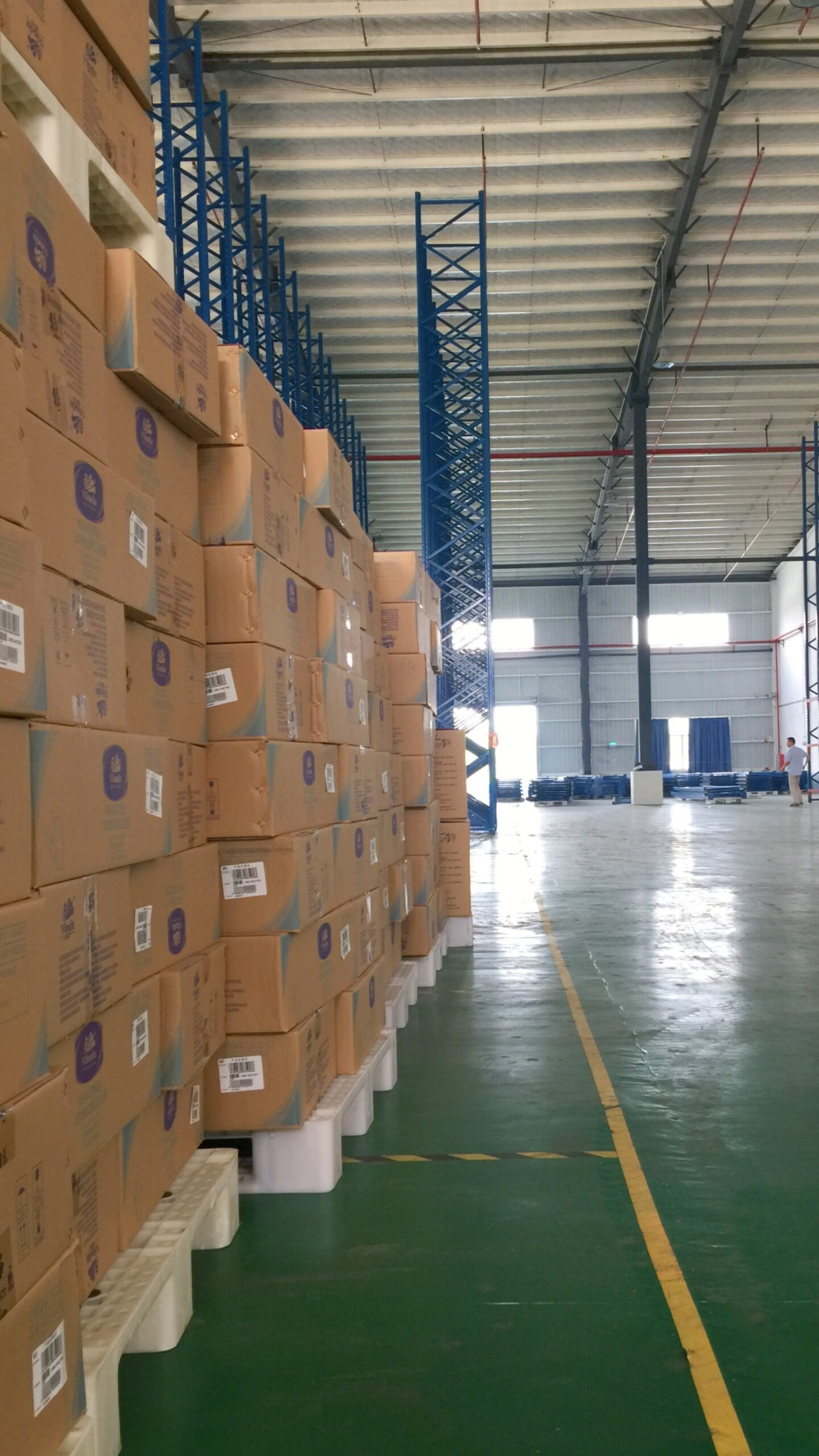
- High-volume turnover goods: Goods of uniform specifications are received and dispatched in full pallets with minimal order splitting. Typical examples include beverages, grain and oil products, bagged raw materials, boxed home appliances and frozen meat products. Such goods have consistent batches and large inbound and outbound volumes per operation.
- Centralized inventory management: Raw material warehouses, finished goods transit warehouses, regional distribution centers and large cold storage facilities of manufacturing enterprises. These warehouses prioritize maximum storage capacity and require large storage space for individual products.
- Cost-sensitive storage areas: Urban core warehouse zones, cold storage facilities and self-built factory buildings where rent and construction costs are relatively high. The high space utilization rate of drive-in racks helps cut down the storage cost per unit of goods.
This part is frequently overlooked during selection and directly affects the long-term stable operation of racks.
- Access rule restrictions: Drive-in racks adopt the Last-In, First-Out (LIFO) principle. Goods stored deep in the aisles can only be accessed after removing pallets on the outer side. Therefore, they are not applicable to scenarios requiring strict First-In, First-Out (FIFO) rules, goods with extremely short shelf life and frequent stock rotation. If shelf life control is mandatory, manual ledger management and zone division are required.
- Goods specification restrictions: Only standard pallets loaded with regular-shaped goods are permitted. Irregular-shaped items, over-height or over-width goods, and loose cargo prone to toppling cannot be stably placed on the guide rails and are prohibited.
- SKU quantity restrictions: A single continuous aisle is recommended to store only one type of SKU. Mixed storage of multiple SKUs will greatly increase forklift operation difficulty and cause inventory management chaos.
II. Planning & Implementation: Key Points from Site Survey to Customized Solutions
A qualified drive-in rack system relies 70% on meticulous planning and 30% on professional installation. Refined design based on on-site conditions is essential to deliver optimal rack performance. The key control points for the entire implementation process are as follows.
- Pre-construction Site Survey
- Floor conditions: Drive-in racks impose strict requirements on floor load-bearing capacity and flatness. The concrete strength of the floor shall be no less than C25, and reinforcement is required for local heavy-load areas. The floor flatness error shall be controlled within ±5mm per meter. Floors with inclination or settlement must be rectified in advance, otherwise pallets will tilt and racks will bear uneven loads.
- Space dimensions: Precisely measure the clear height, length and width of the warehouse. The standard height of drive-in racks ranges from 3 to 8 meters. For extra-high warehouses, comprehensive assessment combining fire safety regulations and forklift lifting capacity is necessary. Meanwhile, keep clear of structural columns, beams, fire pipes, ventilation equipment and other obstacles.
- Fire compliance: Comply strictly with local fire codes. Reserve main fire aisles and fire compartments. Racks shall not block smoke detectors, sprinkler systems, fire hydrants and other fire-fighting facilities. Special scenarios such as cold storage and chemical raw material warehouses shall also meet corresponding fire prevention and explosion-proof standards.
- Storage Bay & Aisle Planning
- Aisle depth design: The depth of each single storage aisle is suggested to hold 4 to 6 pallets. Excessively deep aisles will block forklift sightlines, lower operational efficiency and raise collision risks. For ultra-large inventory volume, arrange multiple short separate aisles instead of one single over-long aisle.
- Aisle width matching: Aisle width is customized according to the type of operating forklifts. Counterbalance forklifts, reach trucks and electric stackers differ in turning radius and overall size. Sufficient operating clearance shall be reserved to balance traffic safety and space utilization.
- Load-bearing tier planning: Design tier load capacities based on the rated load of each pallet. Follow the stacking principle of heavy goods at the bottom and light goods on top. Overloading on lower tiers or underloading on upper tiers is strictly forbidden to ensure reasonable overall force distribution.
- Pallet Standardization Requirements
Pallets act as the connection between racks and goods and must adopt unified specifications. Four-way or nine-foot standard pallets are preferred. The size, thickness and fork pocket positions of pallets shall fully match the guide rails and forklifts. Damaged, deformed or cracked pallets are prohibited from use to prevent goods from tilting and falling.
III. Standard Operating Procedures to Improve Warehousing Efficiency
The operational efficiency and safety of drive-in racks largely depend on standardized collaboration between personnel and handling equipment.
- Standard Inbound & Outbound Procedures
- Inbound operation: The forklift transports full pallets steadily into the aisle, aligns with the guide rails and pushes pallets slowly to designated positions. Ensure pallets are placed centrally without tilting or overhanging. Load goods from the inner end to the outer end of the aisle and fill each tier completely.
- Outbound operation: Follow the LIFO rule and prioritize goods on the outer side of aisles. Operate the forklift at low speed during positioning. Lift and reverse the forklift only after the forks are fully inserted into pallet pockets. Do not pull or push pallets forcibly.
- Daily inspection: Before entering or exiting aisles, operators shall check for debris on guide rails and displaced goods, and resolve problems immediately.
- Efficiency Optimization Tips
- Zone numbering management: Assign unique numbers to each aisle and each tier of racks. Combined with inventory ledgers, record product names, batches and quantities accurately to shorten goods searching time.
- Staggered operations: Avoid concentrated operations in adjacent aisles simultaneously to prevent forklift congestion. Arrange exclusive time slots for large-scale inbound and outbound tasks.
- Dedicated staff training: Arrange fixed operators for the drive-in rack area. Operators shall be fully familiar with driving routes and limit positions to form standardized working habits.
IV. Full-cycle Maintenance to Extend Service Life
As heavy-duty warehousing equipment, drive-in racks are constantly subject to loads and forklift impacts. Establishing regular maintenance and risk inspection mechanisms is critical for long-term safe operation.
- Daily inspection: Check the integrity of column bumpers and limit blocks, clear debris and rectify displaced goods in aisles, and inspect pallet conditions before and after daily operations.
- Monthly comprehensive inspection: Examine all bolts and connectors for looseness or falling off. Inspect brackets and guide rails for deformation and wear, and calibrate slightly tilted columns.
- Annual professional inspection: Professional technicians shall conduct a full inspection on the overall verticality, component deformation, weld quality and load-bearing performance of racks, and issue inspection reports. Replace and repair aged or damaged components in a timely manner.
- Core Risk Prevention & Control
- No overloading: Store goods strictly in accordance with the designed load capacity. Overloading and over-stacking across tiers are prohibited, as these are the main causes of rack collapse.
- Anti-collision management: Enforce speed limits for forklifts inside rack aisles. Sharp turns and sudden reversing are not allowed. Replace damaged column bumpers immediately.
- Personnel safety: Rack operation aisles are mechanical working areas. Pedestrian walking, order picking and loitering inside aisles are strictly forbidden. For necessary on-site work, cut off power supply, set up barriers and assign dedicated supervisors.
- Environmental protection: For warehouses with high humidity, cold storage and chemical storage areas, inspect rack paint regularly. Repair peeling paint and rust promptly for anti-corrosion protection.
Drive-in racks are more than just warehousing equipment; they are a cost-effective and high-density storage solution tailored for high-volume goods. With mature structural design and excellent space utilization, they are widely applied in food, cold chain, manufacturing and raw material warehousing industries. To maximize their value, stick to precise pre-project planning, standardized on-site operation and sustained post-operation maintenance. Meanwhile, always comply with applicable usage limits and avoid improper application.
 StorLogi