In modern commerce, fast-moving consumer goods, and industrial distribution, warehouse land costs keep climbing, order volumes continue to grow year by year, and the need for precise inventory management keeps increasing. Traditional flat warehouses and ordinary beam racks can no longer meet the demands of large-scale business development. Automated Storage and Retrieval Systems (AS/RS), as the core solution for modern smart warehousing, rely on high-rise racks, stacker crane automated storage and retrieval systems, and WMS/WCS intelligent scheduling software to achieve high-density storage, unmanned operations, and full-process digital management. This completely reshapes warehouse operations in terms of space utilization, inbound/outbound efficiency, and inventory accuracy. The newly implemented automated warehouse project, with its mature system architecture, strict process standards, and full-process one-stop delivery service, provides customers with a standardized, intelligent, and efficient modern smart warehousing center.
I. Project Background and Core Construction Requirements
The client for this project is a large comprehensive trading enterprise, mainly dealing in office supplies, daily consumer goods, and other product categories. As their business expands nationwide, the traditional warehousing model has shown multiple development bottlenecks:
- Limited land resources restrict warehouse expansion: The existing flat warehouse has a space utilization rate of less than 30%, with goods stacked in a disorderly manner. Expanding would require renting new facilities, significantly increasing warehousing costs.
- Low efficiency and high error rates in manual warehousing: Relying on manual labor and forklifts to retrieve and store goods, the throughput during peak periods is insufficient. Manual picking and inventory checking often result in errors, missed shipments, and discrepancies between accounts and physical stock.
- Crude inventory management and difficulty in batch tracing: With many SKUs and multiple batches, there is a lack of systematic location control, making FIFO difficult to implement. Stagnant inventory and items nearing expiration cannot be alerted in time.
- High difficulty in warehouse operation safety control: High-level manual stacking and frequent forklift operations easily cause collapses or collisions, leading to high costs in personnel management and on-site standardization.
Based on the client’s warehouse building parameters, pallet specifications, daily inbound and outbound throughput, and digital transformation plans, we customized a double-aisle automated warehouse system. It includes high-level heavy-duty racks, high-speed stackers, inbound and outbound conveyor-sorting lines, and an intelligent WMS warehouse management scheduling system. This allows for a several-fold increase in storage capacity within limited floor space, while achieving full upgrades in automated operations, digital inventory management, and standardized process control.
II.Overall System Design and Core Hardware Technology.
This automated high-rise warehouse system consists of five main modules: the high-rise shelving system, aisle stacker crane system, inbound and outbound conveyor system, WMS/WCS intelligent scheduling control system, and safety protection system. The overall design strictly adheres to domestic automation warehousing industry standards, steel structure design codes, and fire safety regulations, while balancing safety, stability, scalability, and intelligence.
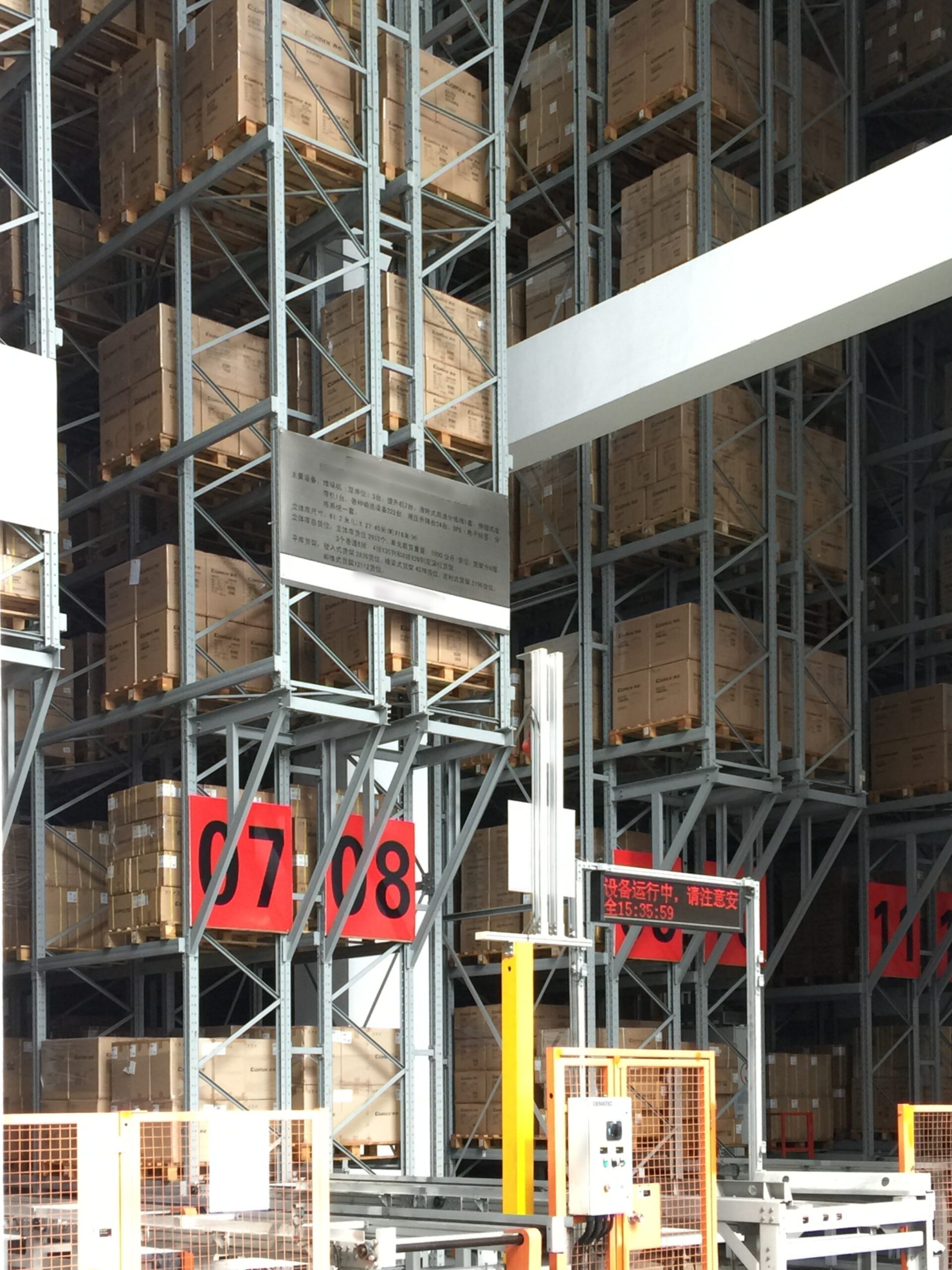
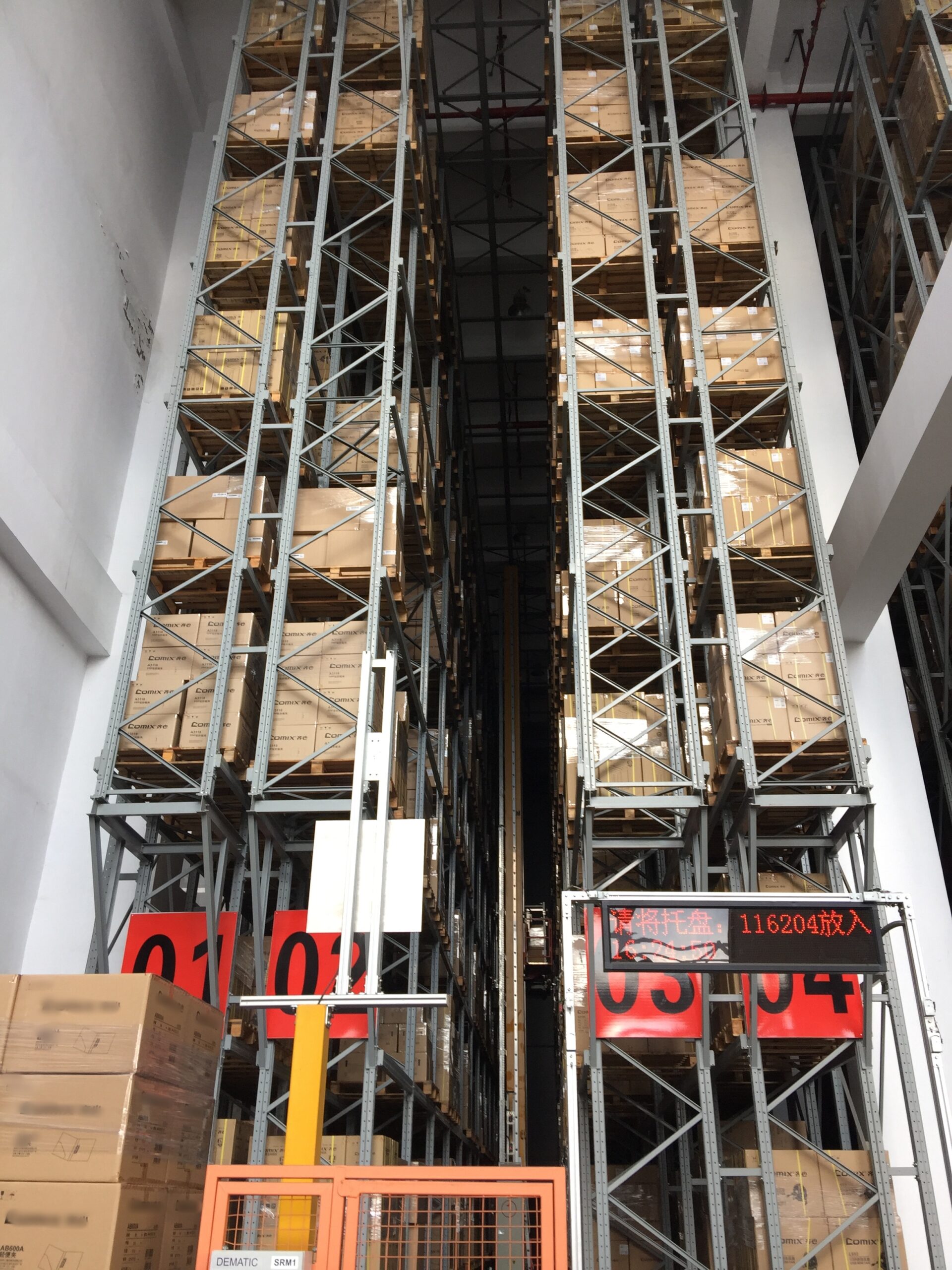
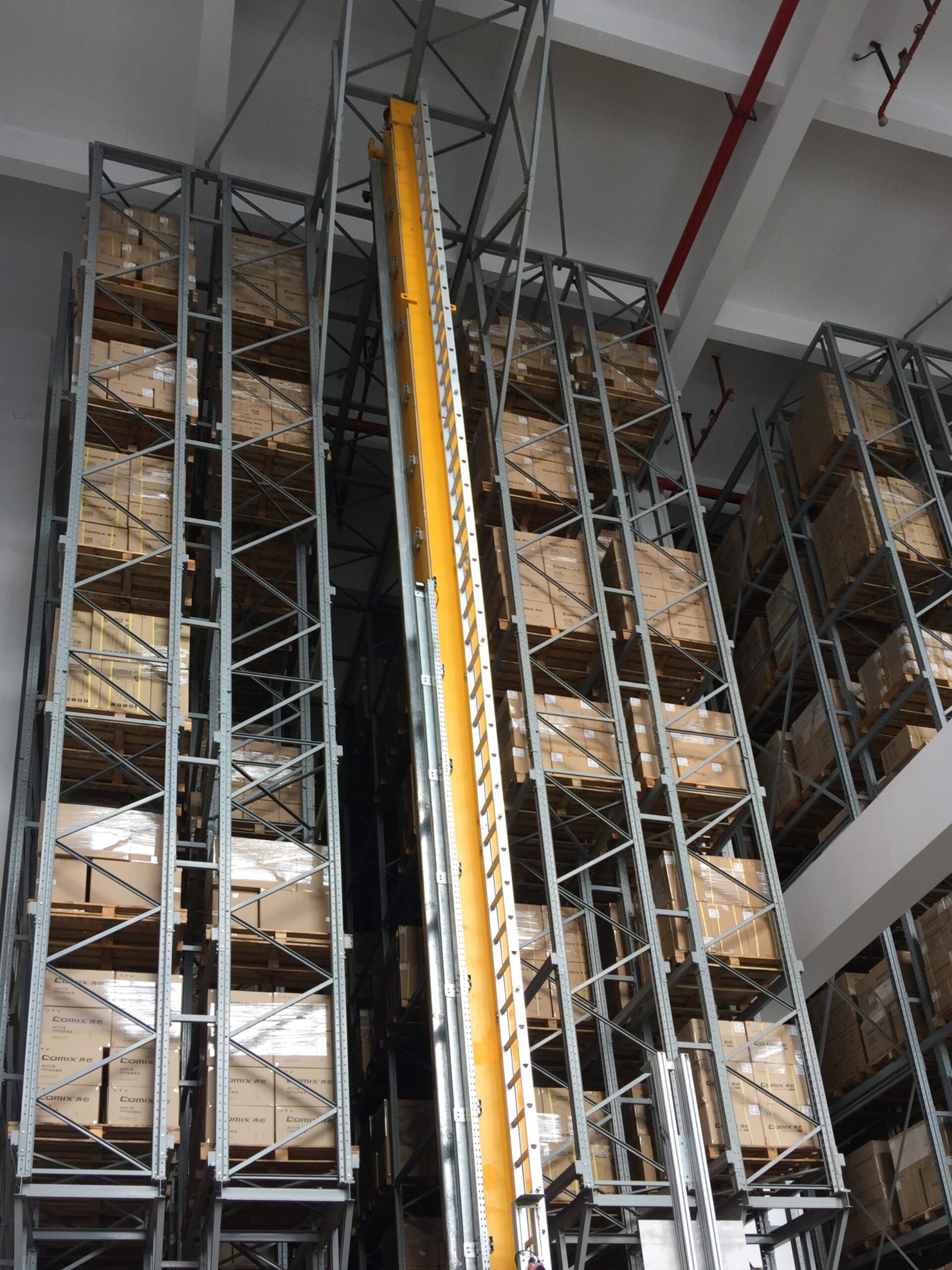
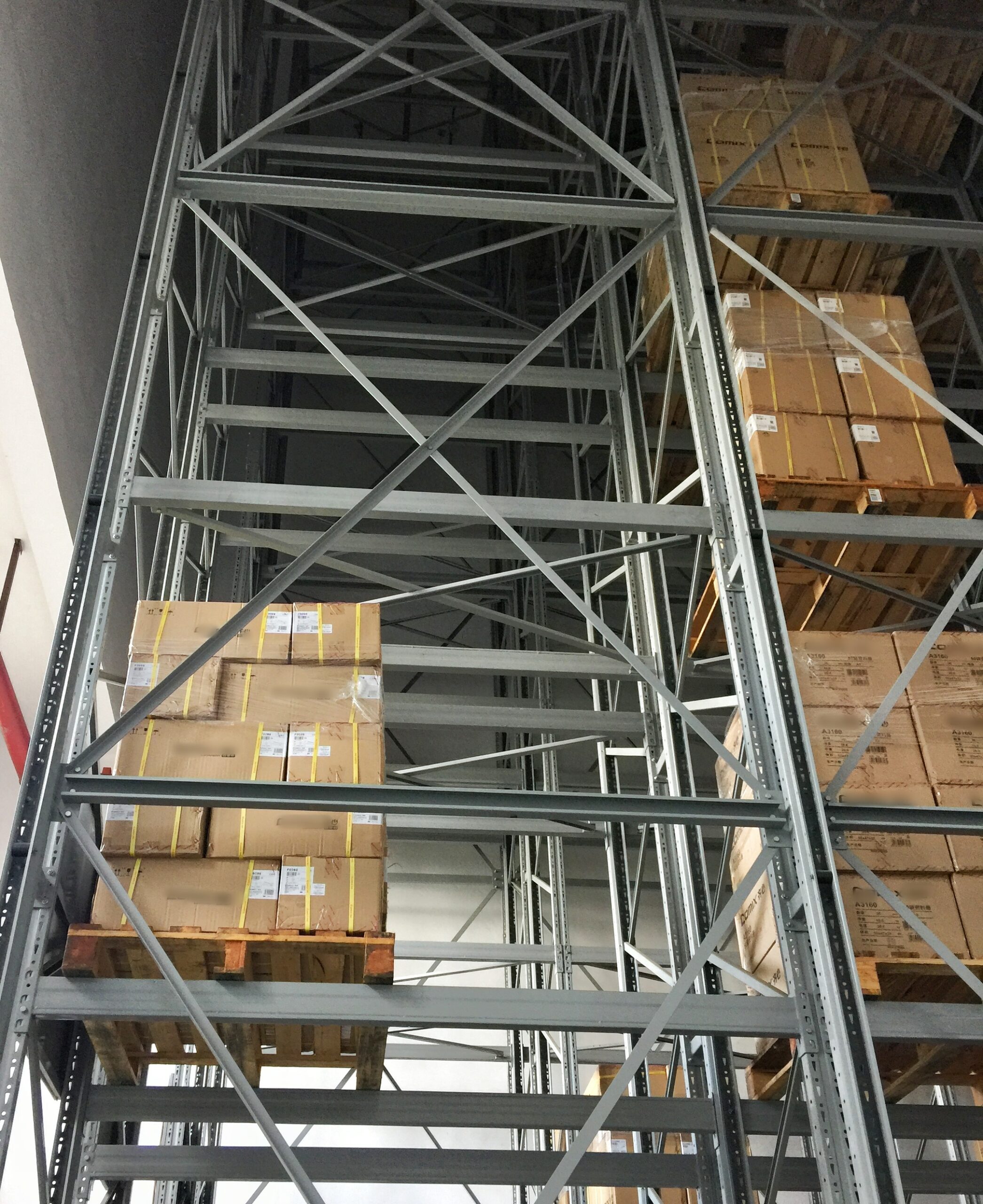
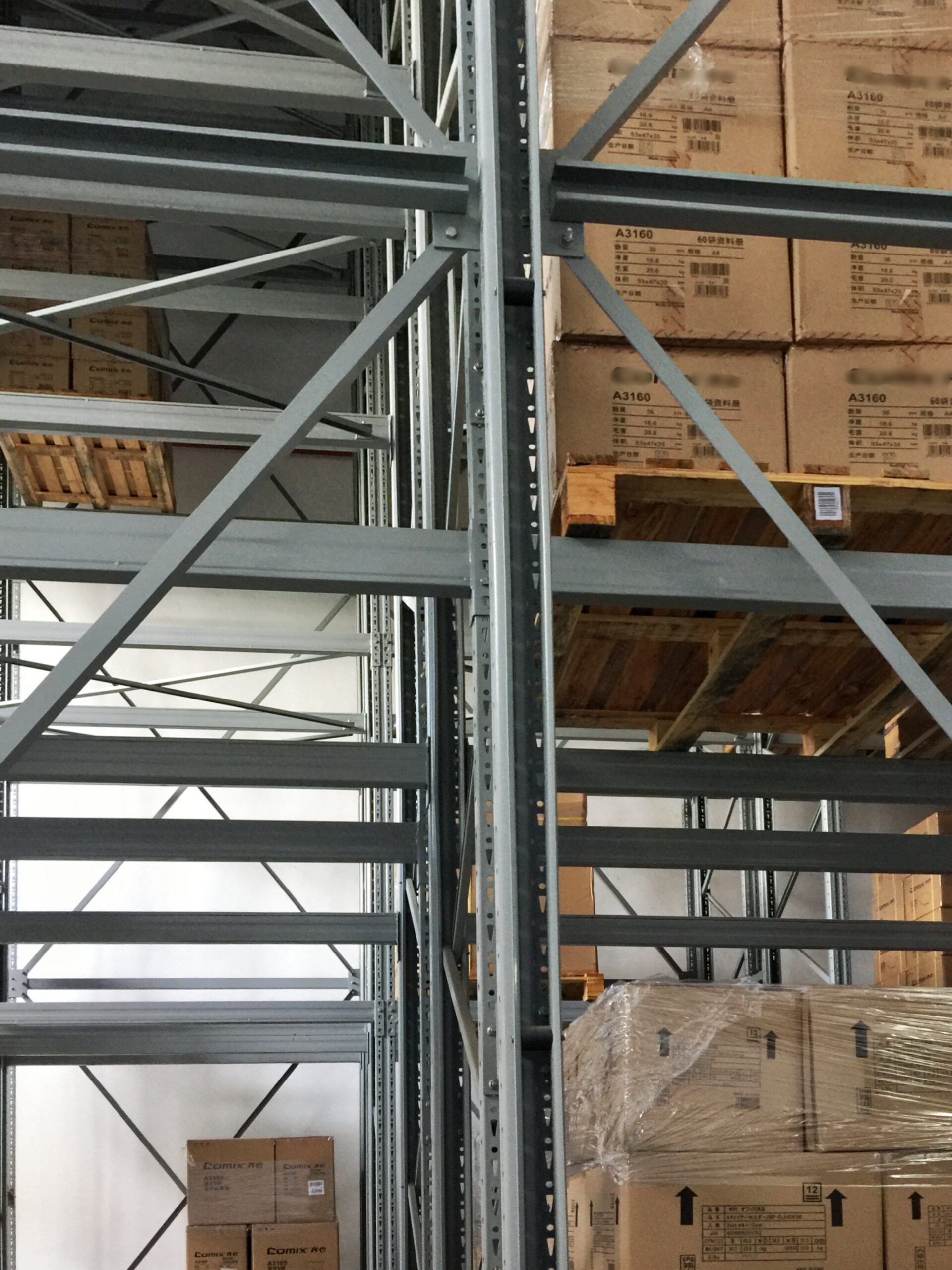
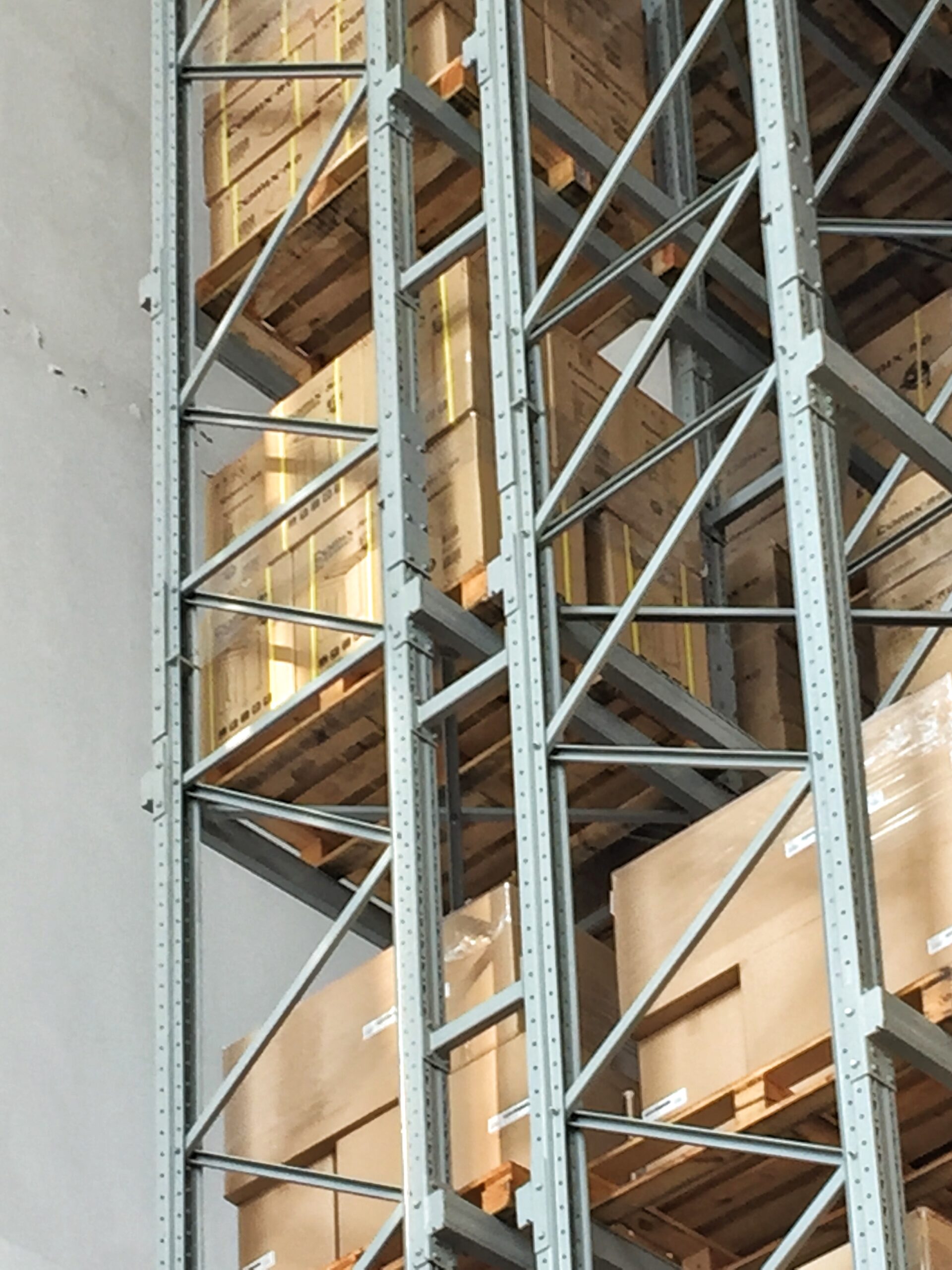
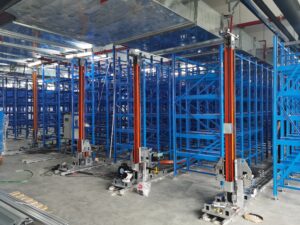
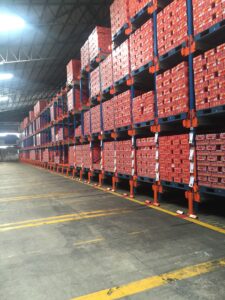
1.High-rise Automated Shelving System As the core supporting structure of the automated warehouse, the high-rise shelving forms the backbone of the entire smart storage system.
In this project, the shelves are designed with a total height of 18 meters, using Q355B high-strength hot-rolled steel. Compared with conventional warehouse steel, it offers greatly improved tensile, compressive, and lateral resistance, allowing it to withstand heavy loads at height for long periods.
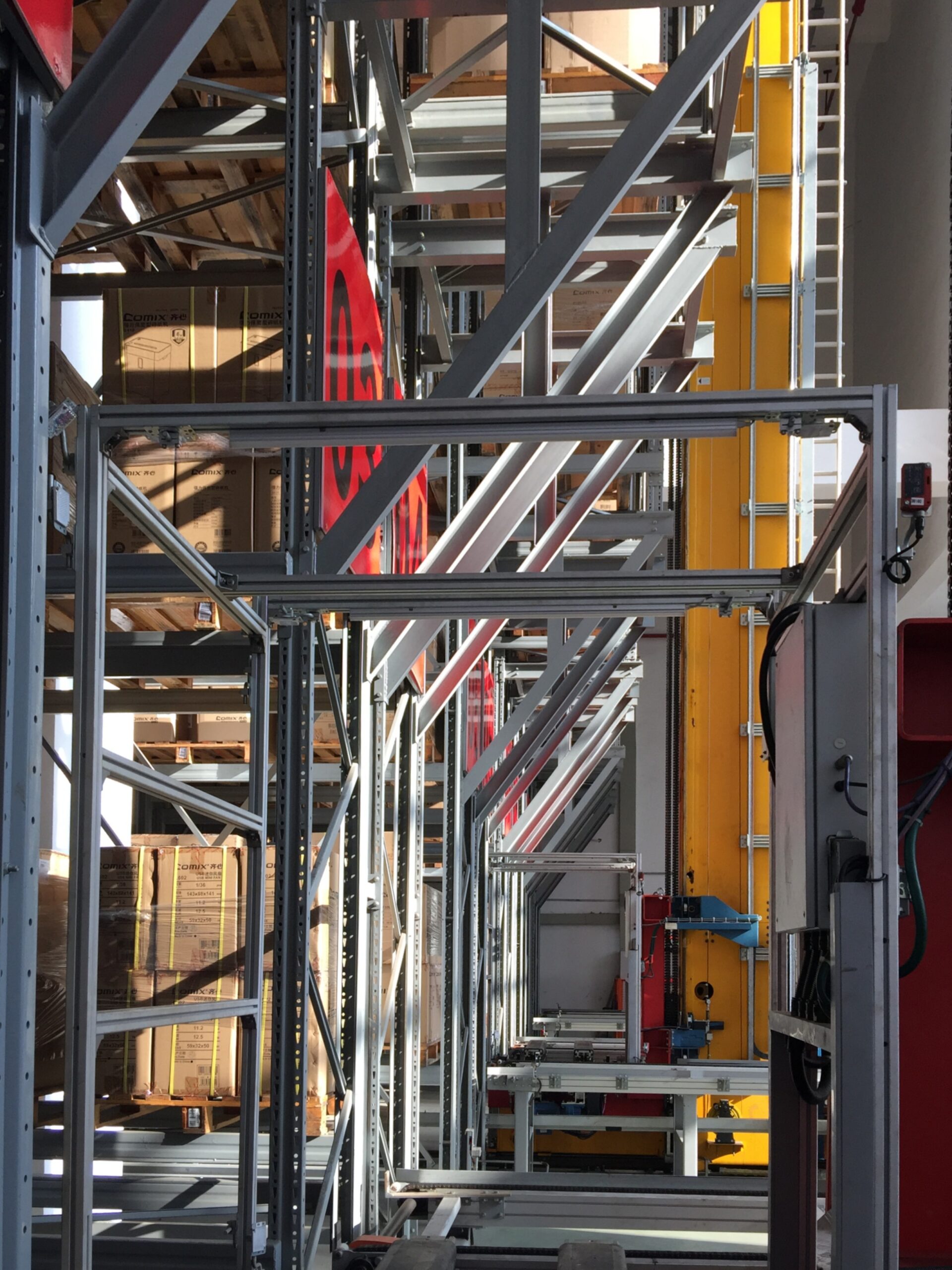
Precision Structural Design The shelf columns are made using fully automated CNC cold-bending integrated forming, treated with shot blasting, rust removal, and hot-dip galvanizing for corrosion protection, making them rust-resistant and wear-resistant and suitable for long-term ambient temperature storage. The columns feature high-precision continuous positioning holes, while the beams are securely fastened with high-strength bolts. Combined with lateral and longitudinal cross braces and horizontal tie rods, a stable spatial truss structure is formed. The overall structure has been mechanically simulated for earthquake, wind, and heavy-load deflection, and under full load, the deflection is far below the national safety limits, ensuring stability during high-level operation.
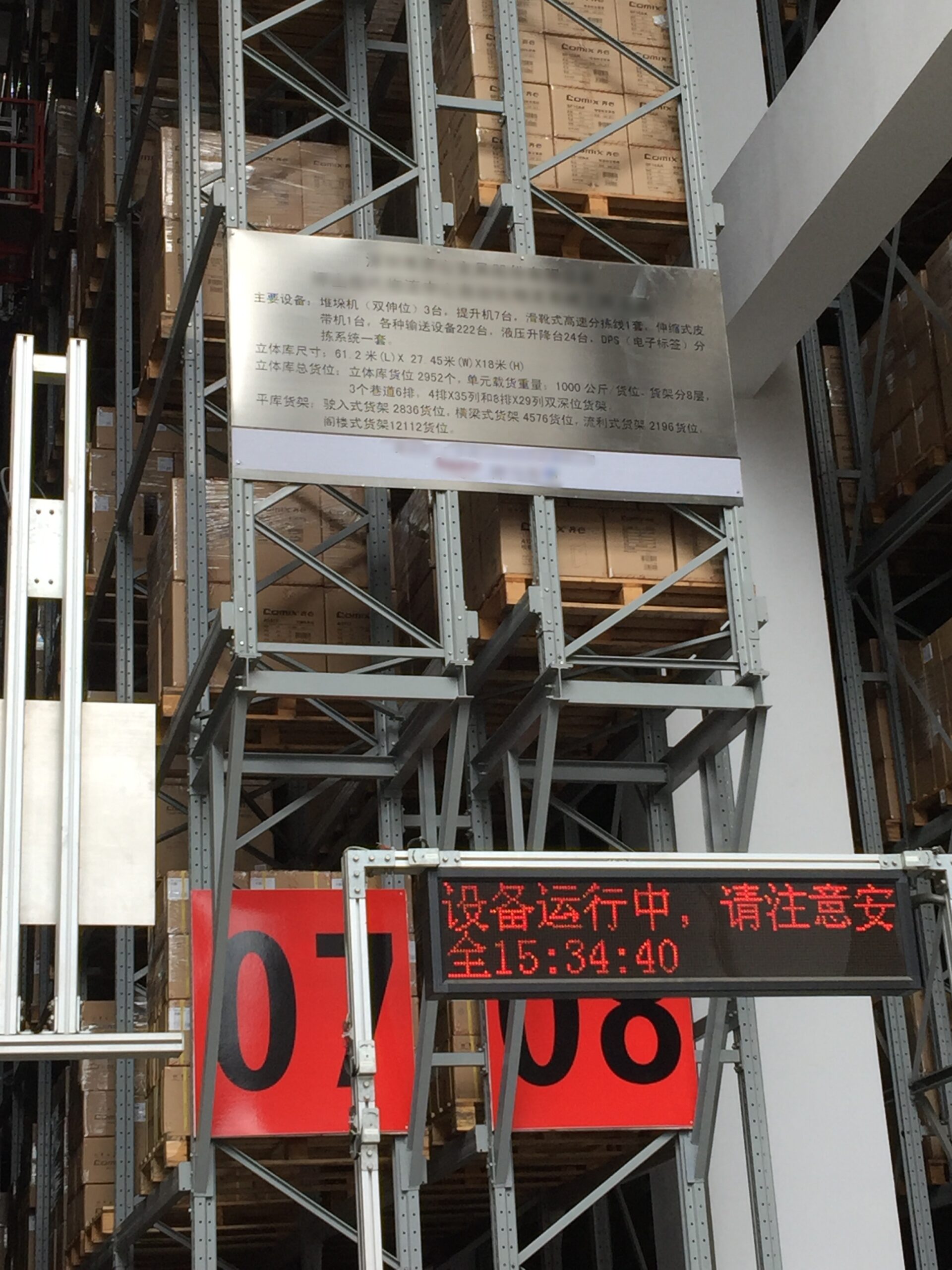
The shelving uses a dense single-depth layout, with a total of 2,952 standard pallet positions planned in this project, designed with an 8-layer high layout to fully utilize vertical warehouse space. On the same floor area, the storage capacity is over eight times that of a traditional flat warehouse, completely solving the client’s storage expansion problem.
Standardized and Detailed Storage Design All storage locations are custom-designed according to the client’s standard pallet sizes, with anti-slip and positioning features to prevent goods from shifting or falling during high-level storage and high-speed handling. Each location has a unique code, integrated with the WMS system to bind locations, pallets, and goods one-to-one, ensuring every item can be accurately located and fully batch-traceable, strictly enforcing first-in, first-out storage management.
2.Automated Storage and Retrieval System (ASRS) for Aisle Stacker Cranes
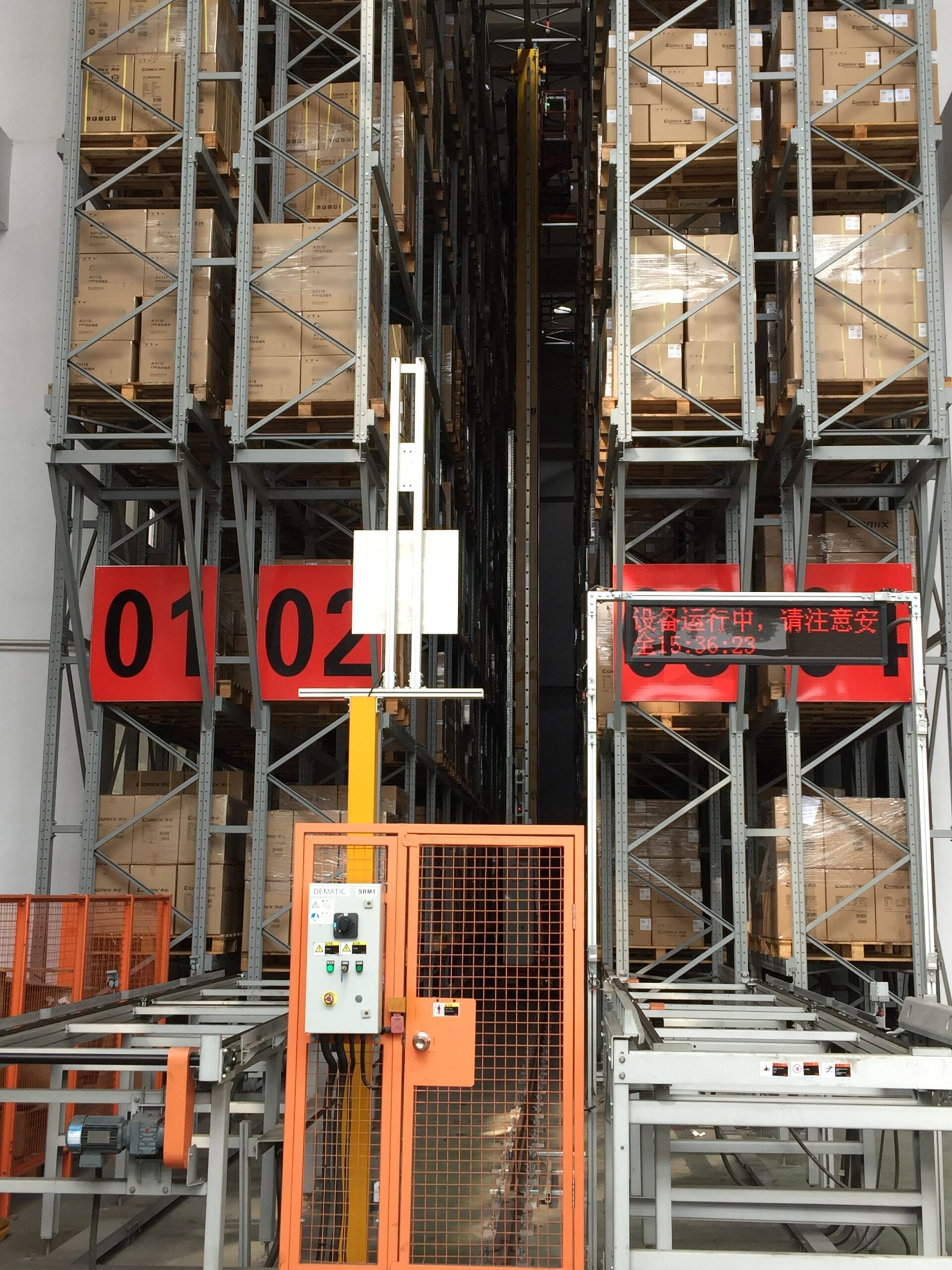
Stacker cranes are the core equipment of an automated warehouse, handling high-speed automatic storage, retrieval, and transfer of palletized goods between storage racks and in/out stations. This project is equipped with double-aisle, dual-stacker crane systems, featuring a dual-column rigid design for stable operation and high positioning accuracy.
High-precision, stable operation performance
The stacker crane uses a dual positioning method of laser distance measurement and barcode recognition for both horizontal and vertical movements, achieving positioning accuracy of ±0.5mm. Fork extension is precisely controlled to ensure smooth pallet handling, preventing scratching, dropping, or misalignment of goods. The equipment supports fully automatic, semi-automatic, and manual operation modes to cater to daily automated tasks, maintenance, and emergency troubleshooting.
High throughput to match operational needs
The horizontal speed, lifting speed, and fork extension speed of the stacker crane have been optimized through scenario adjustments. Each stacker crane can complete over 60 in/out operations per hour. Dual-aisle collaborative operations can fully meet peak periods when large volumes of goods need to be handled. Throughput efficiency is more than five times higher than traditional manual storage. The equipment also features multiple overload protections, limit protections, and collision prevention functions. In case of overspeed, overreach, or overweight situations, the system will immediately stop and issue an alarm to ensure the safety of equipment, goods, and personnel.
3.Inbound and Outbound Conveyor and Sorting System
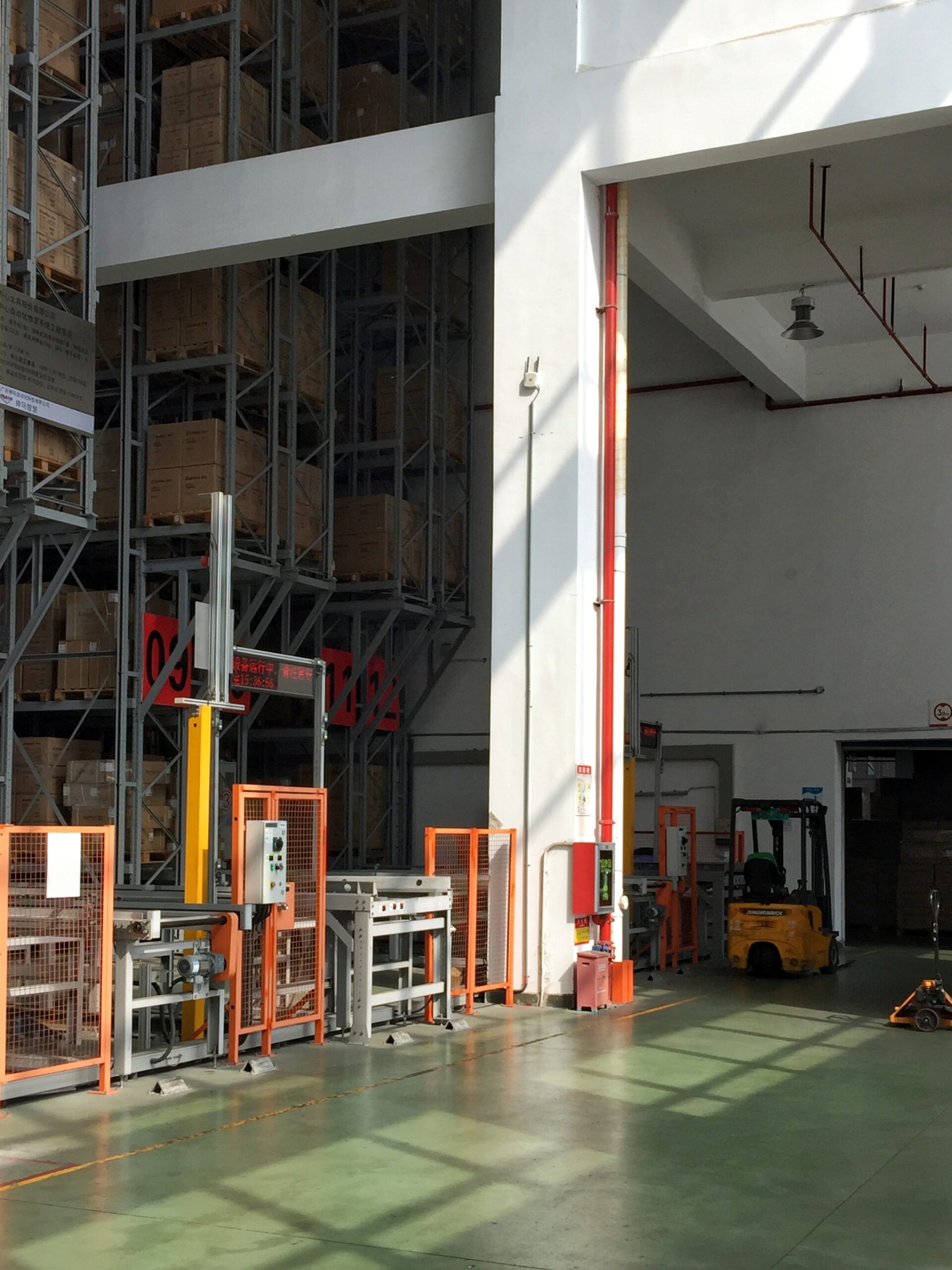
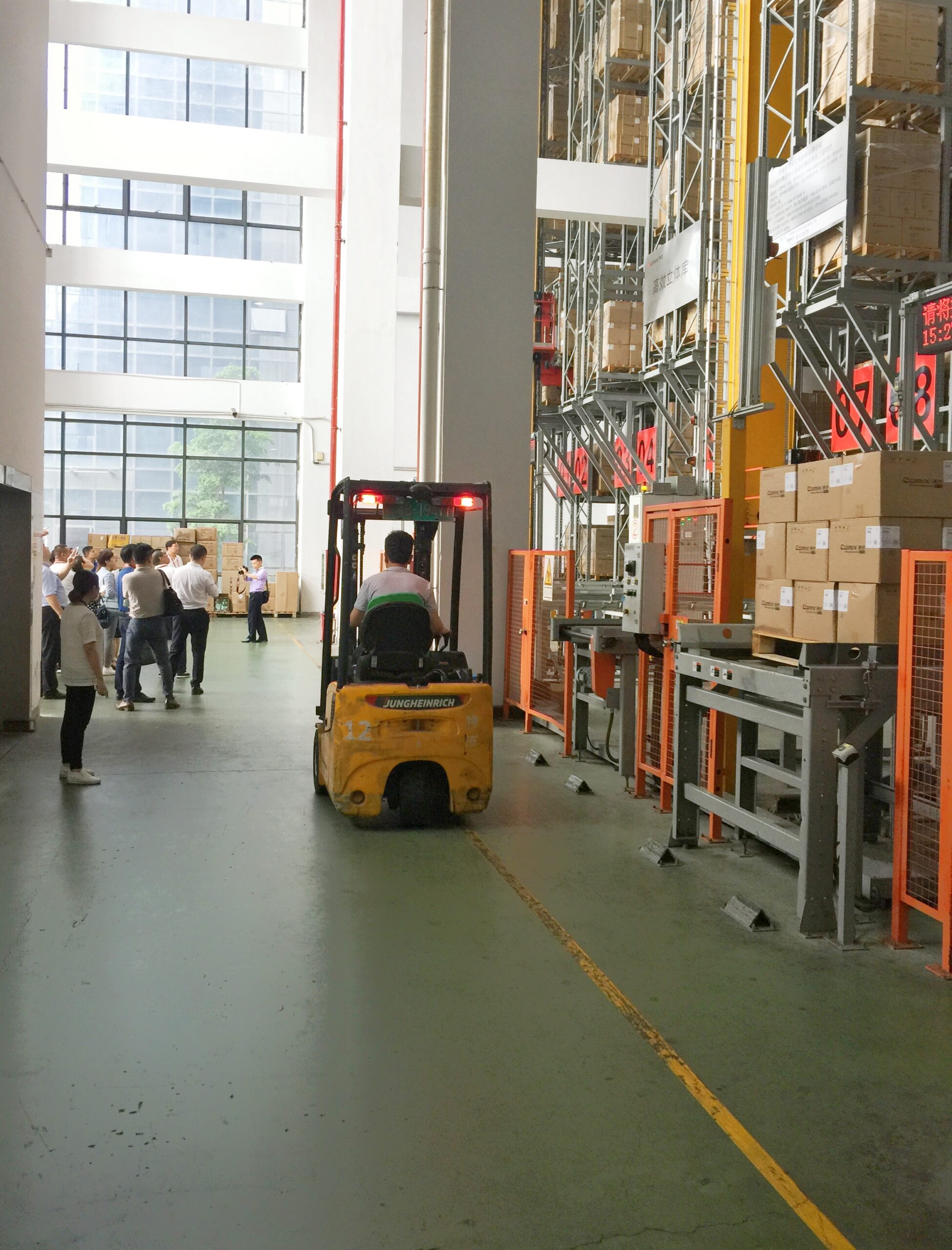
The front end of the warehouse is equipped with automated conveyor systems, including continuous belt conveyors, roller conveyors, transfer devices, and lift machines, forming a closed-loop logistics flow from forklift entry, temporary storage, automatic stacker storage, to outbound sorting.
External forklifts place fully loaded pallets onto the inbound station, where the conveyor system automatically checks the pallet, verifies its shape, scans barcodes for tracking, and the WCS system assigns the optimal storage location, directing the stacker crane to complete automatic storage. During outbound operations, the system uses order tasks to dispatch the stacker crane to transfer targeted pallets to the outbound station. The conveyor then moves them to the sorting area for pallet breakdown, picking, and order verification. This process minimizes manual handling, optimizes warehouse flow, reduces labor intensity, and avoids risks of damage or mistaken shipments due to manual transfer.
4.WMS/WCS Intelligent Warehouse Scheduling and Control System
The software system is the brain of the automated warehouse. The WMS (Warehouse Management System) handles business-level management such as inventory accounts, order management, batch management, expiry warnings, stocktaking statistics, and report generation. The WCS (Warehouse Control System) handles task instructions, real-time monitoring of stackers, conveyor lines, all automated equipment operation status, fault alarms, and task priority scheduling.
Seamless multi-system integration: It can exchange data with enterprise ERP, MES, TMS, and other upstream business systems, enabling full-chain data connectivity for orders, procurement, sales, and warehousing, eliminating information silos;
Full lifecycle inventory control: The system automatically records the storage time, location, and outbound flow for each batch of goods. It supports FIFO and near-expiry-first-out strategies and automatically provides pop-up warnings for near-expiry and stagnant inventory, significantly reducing product loss;
Visual operation and maintenance management: Equipped with a 3D visual monitoring screen for the warehouse area, it shows real-time storage location occupancy, equipment operation status, inbound and outbound task progress, and inventory data. Managers can grasp the entire warehouse operation without leaving their desk. It also supports full retention of operation logs for easy problem tracking and compliance auditing.
5.Comprehensive Safety Protection System
Considering the operational characteristics of high-level automated warehousing, this project implements multiple hardware and software safety protection measures:
Physical isolation protection: Mechanical hard limits and photoelectric safety limits are installed at both ends of the stacker aisle. Safe nets and access controls are set up in inbound/outbound areas. Unauthorized personnel triggers automatic emergency stops;
Electrical safety protection: All automated equipment is equipped with overload, short-circuit, leakage, and lightning protection. Key control systems use redundant power supplies to prevent data loss or equipment jams due to sudden power failures. The warehouse area is equipped with fire and temperature sensors linked to the fire protection system to meet high-level warehouse fire safety standards;
Operation and maintenance safety design: Reserved equipment maintenance passages and safety platforms, along with emergency manual operation modes, allow safe shutdown and maintenance during sudden faults. Critical points on the shelves have safety signs and equipment operation screens to provide real-time operation status and standardize on-site personnel behavior.
III.Full-process Project Pmplementation and Standardized Delivery
This automated warehouse project offers a full-chain, one-stop service model covering everything from initial surveys and planning → simulation design → factory prefabrication → on-site steel structure installation → electromechanical equipment commissioning → software integration testing → trial operation and acceptance → to operation and maintenance training. Multi-disciplinary teams work together to ensure that large intelligent warehouse projects are delivered on time and meet high standards.
1.On-site Survey and Simulation Plan Design
In the early stages of the project, a multi-disciplinary technical team including structural, electrical, software, and process experts jointly went on-site to accurately measure warehouse clear height, floor load capacity, fire safety points, column layout, and vehicle flow for goods in and out. Combining the client’s warehouse traffic data from the past three years, SKU distribution, and pallet parameters, warehouse simulation software was used to model storage location utilization, stacker peak operations, and conveyor throughput bottlenecks. The aisle layout, storage levels, and equipment quantity were optimized repeatedly, ultimately producing the best practical solution that balances investment cost-effectiveness, long-term scalability, and operational efficiency.
2.Modular Prefabrication in the Factory
High shelves, stacker steel frameworks, and conveyor frames are all produced in-house in smart production workshops with CNC cutting, welding, anti-corrosion treatment, and pre-assembly verification. Each batch of raw materials undergoes mechanical performance testing, and finished components are only packaged and shipped after passing dimensional accuracy and load sampling inspections. Modular prefabrication ensures machining precision and significantly shortens on-site construction time, reducing safety risks related to high-altitude welding work.
3.Multi-Disciplinary On-site Installation
On-site installation is coordinated among steel structure rack installation teams, electromechanical equipment installation teams, and electrical wiring teams, following strict high-altitude safety standards and steel structure installation acceptance criteria. The racks are calibrated with laser theodolites for verticality and level, layer by layer reinforced, ensuring that the total deviation of extensive racks stays within high-precision industry standards. Stacker rails are repeatedly calibrated for horizontal and linear accuracy to ensure smooth high-speed operation. Power and low-voltage wiring are separated, and grounding and lightning protection systems are implemented according to electrical codes to prevent electromagnetic interference and electrical hazards.
4.Hardware and Software Commissioning and Full-load Test Run
After hardware installation, the technical team performs single-device debugging, full-line commissioning, and WMS-WCS system integration. Multiple scenarios including full warehouse, empty warehouse, peak in/out flows, and emergency faults are simulated for a 72-hour uninterrupted full-load test run. Task scheduling algorithms and equipment operating parameters are repeatedly optimized, and process bottlenecks are corrected to ensure system stability and that operational efficiency meets the design requirements.
5.Project Joint Acceptance and Tiered Operational Training
Overall project acceptance is conducted jointly by our team, the client, and supervision personnel, checking steel structure safety parameters, equipment performance, software functionality, inventory accuracy, and fire safety compliance. After acceptance, tiered training is provided for warehouse administrators, equipment maintenance engineers, and front-line operators: warehouse staff are trained on WMS operation, inventory ledger management, and order processing; maintenance staff are trained on daily inspection, troubleshooting, spare parts replacement, and basic system maintenance for stackers and conveyors. Complete as-built drawings, equipment manuals, operation guides, and emergency response plans are delivered to ensure the client can independently manage daily operations and basic equipment maintenance.
IV.Core Value of Project Implementation and Industry Empowerment Advantage
1.Maximizing warehouse land use, greatly reducing expansion costs
With an 18-meter-high dense vertical storage design, storage capacity is increased more than 8 times without changing the existing warehouse footprint. There’s no need to build or lease new buildings, saving a lot on annual land rental and construction expansion costs. The high-density storage layout also raises land utilization from the traditional 30% to over 90%, maximizing the value of warehouse space.
2.Unmanned smart operations, significantly lowering labor costs
Core processes like inbound/outbound, storage, and inventory checking are automated. Only a few operators are needed for system management, forklift unloading, and order verification, cutting labor requirements by over 60%. At the same time, workers are freed from repetitive heavy lifting, which greatly reduces labor, management, and injury-related costs.
3.Digital inventory management, almost 100% accuracy
With the WMS smart warehouse management system, every item is precisely assigned to a location and scanned automatically in and out, eliminating errors from manual ledgers and achieving 99.99% inventory accuracy. Batches, expiration dates, and serial numbers are fully traceable, FIFO policies are automatically applied, and obsolete or nearly expired stock is reduced, freeing up company cash flow.
4.Upgraded throughput capacity, supporting business scale-up
The dual-stacker high-throughput model easily handles peak periods like e-commerce promotions or quarterly stock surges. Warehousing bottlenecks are cleared, supply chain response speeds increase significantly, enabling continuous nationwide business expansion and building a competitive advantage in the supply chain.
5.Modular, expandable design for long-term growth
Shelving allows for future additional layers or aisle expansion. WMS/WCS systems support modular upgrades and multi-warehouse cluster management. As business grows, companies can expand storage capacity by adding stackers or software functions without overhauling the whole warehouse system. This one-time investment can meet the company’s storage needs for over 20 years.
V.Full Lifecycle Local Operations Support
Automated stereoscopic warehouses are large-scale intelligent integrated systems, and long-term stable operation relies on comprehensive maintenance and support services. For this project, we’ve set up a dedicated customer service file and provide full lifecycle maintenance services:
- Regular on-site inspections and maintenance: We conduct preventive inspections on-site four times a year, checking and maintaining the shelf structure, stacker transmission components, electrical wiring, control systems, and safety devices to identify potential issues early;
- 7×24 hours remote and on-site emergency response: If equipment malfunctions, we can diagnose and adjust remotely online. If it can’t be solved remotely, our local maintenance team quickly arrives on-site to repair, minimizing downtime;
- Original spare parts on standby: We keep a stock of core wear-and-tear parts, allowing quick replacement and repairs, preventing warehouse downtime due to long procurement cycles;
- Lifetime software upgrades and technical support: The WMS/WCS system offers free minor updates, and we provide ongoing technical consultation, process optimization, and warehouse renovation design services, continuously supporting customers in smart warehouse operations.
As the core infrastructure of smart logistics, the automated vertical warehouse is a key turning point for companies moving from traditional storage to a digital and intelligent supply chain. The successful completion and delivery of this project not only helped the client completely solve issues like insufficient storage space, low operational efficiency, and rough inventory management, but also built a modern intelligent warehousing system that can be continually upgraded and efficiently scaled, laying a solid supply chain foundation for the company’s nationwide operations.
 StorLogi