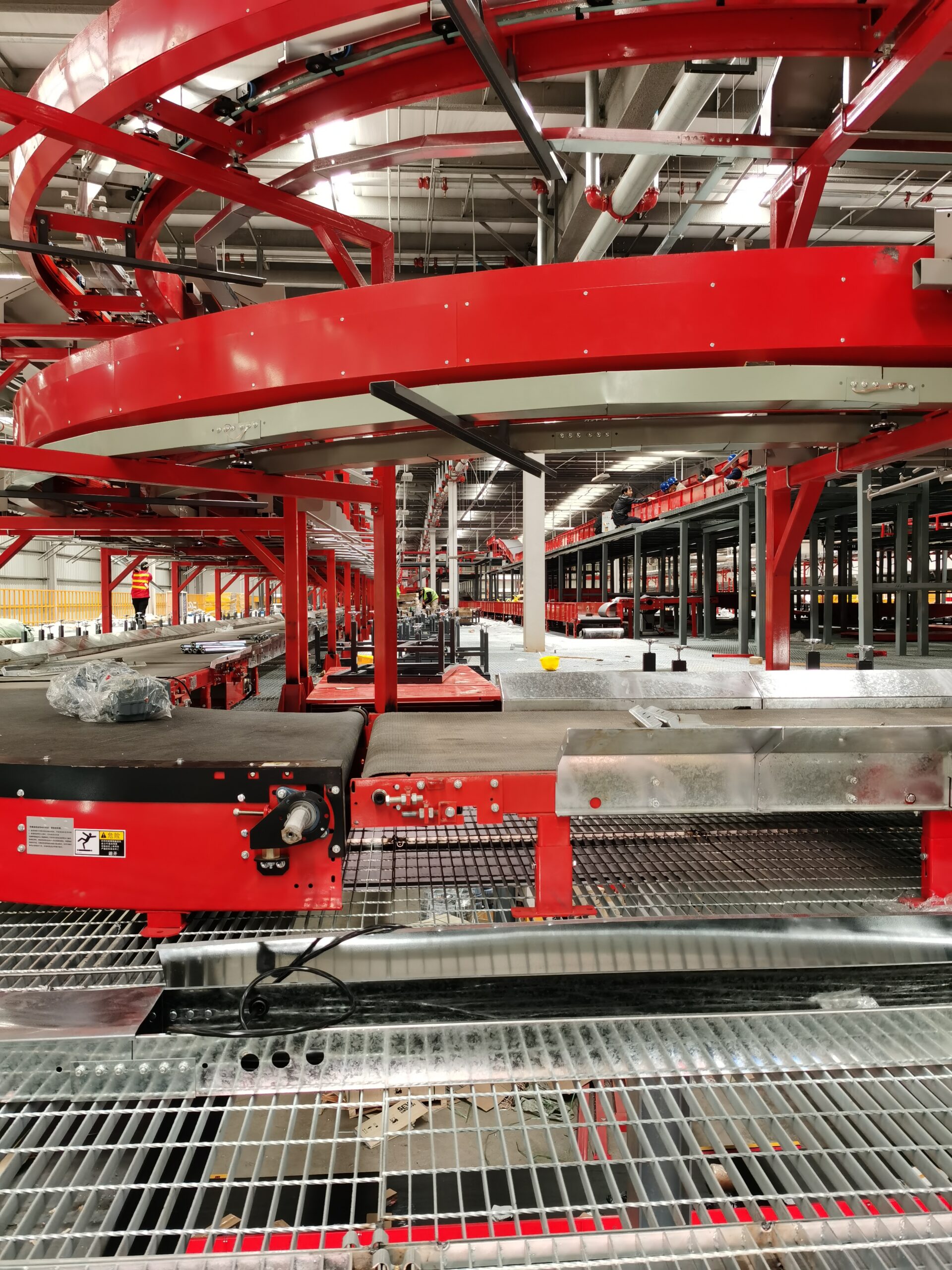
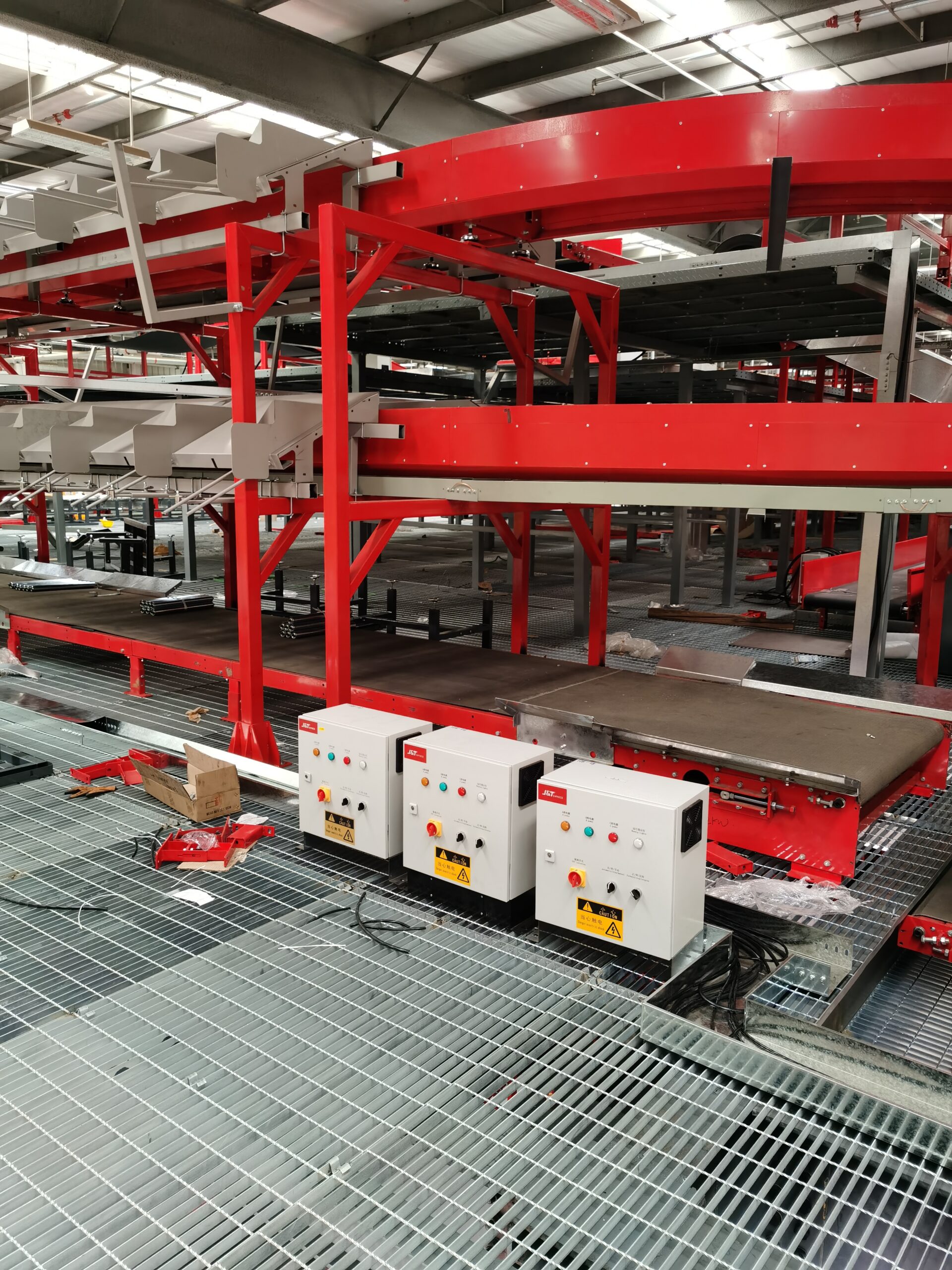
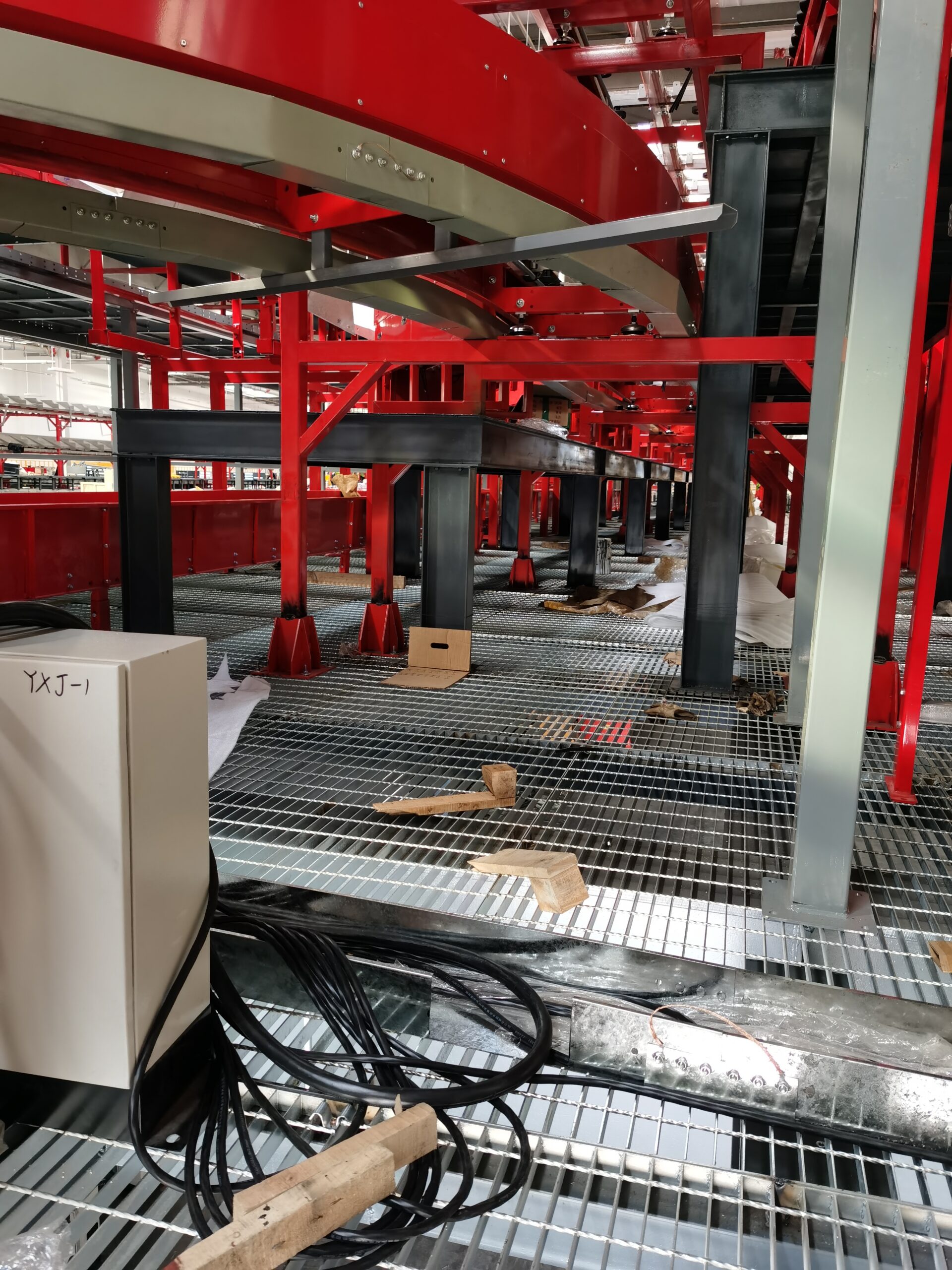
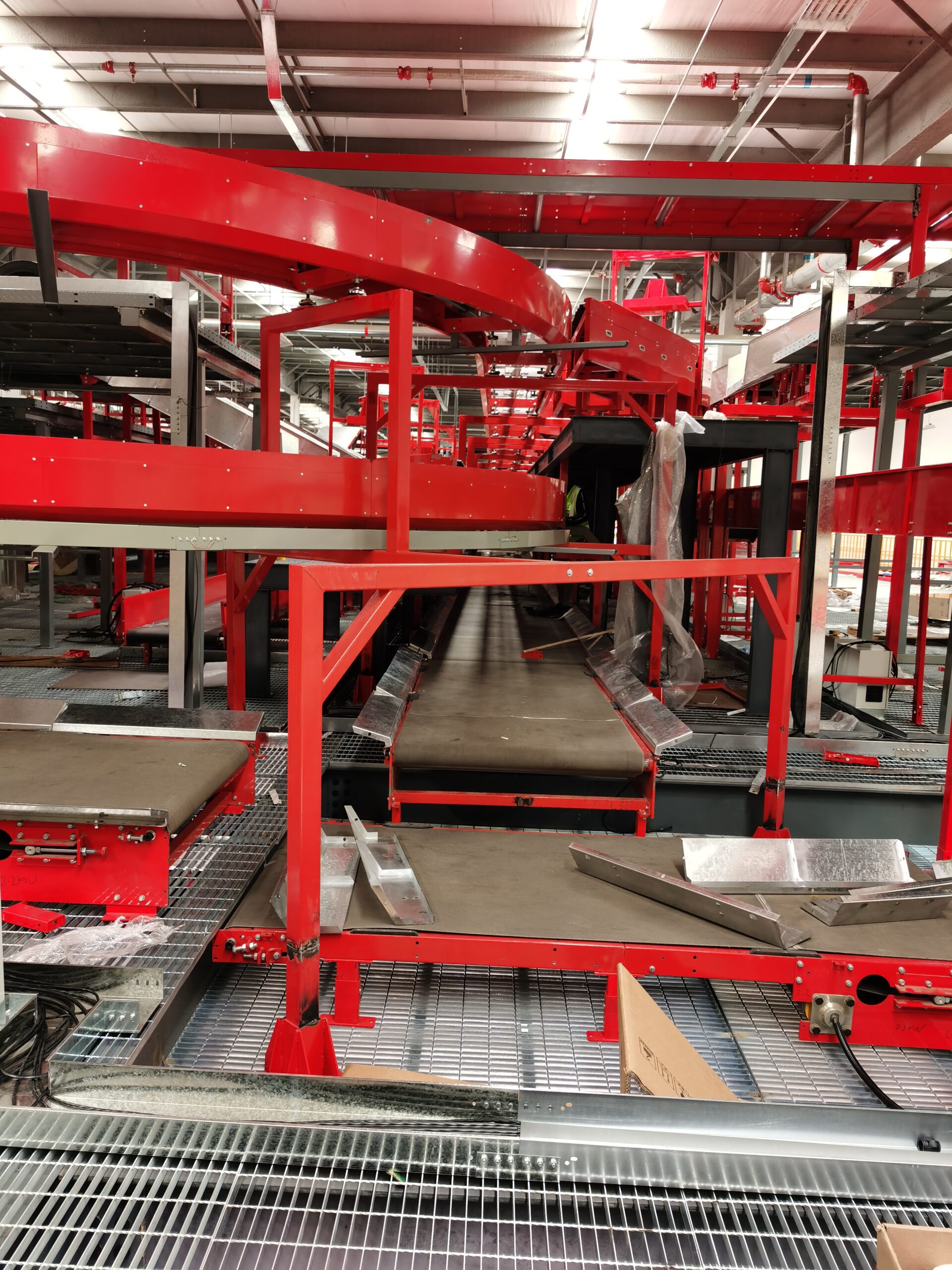
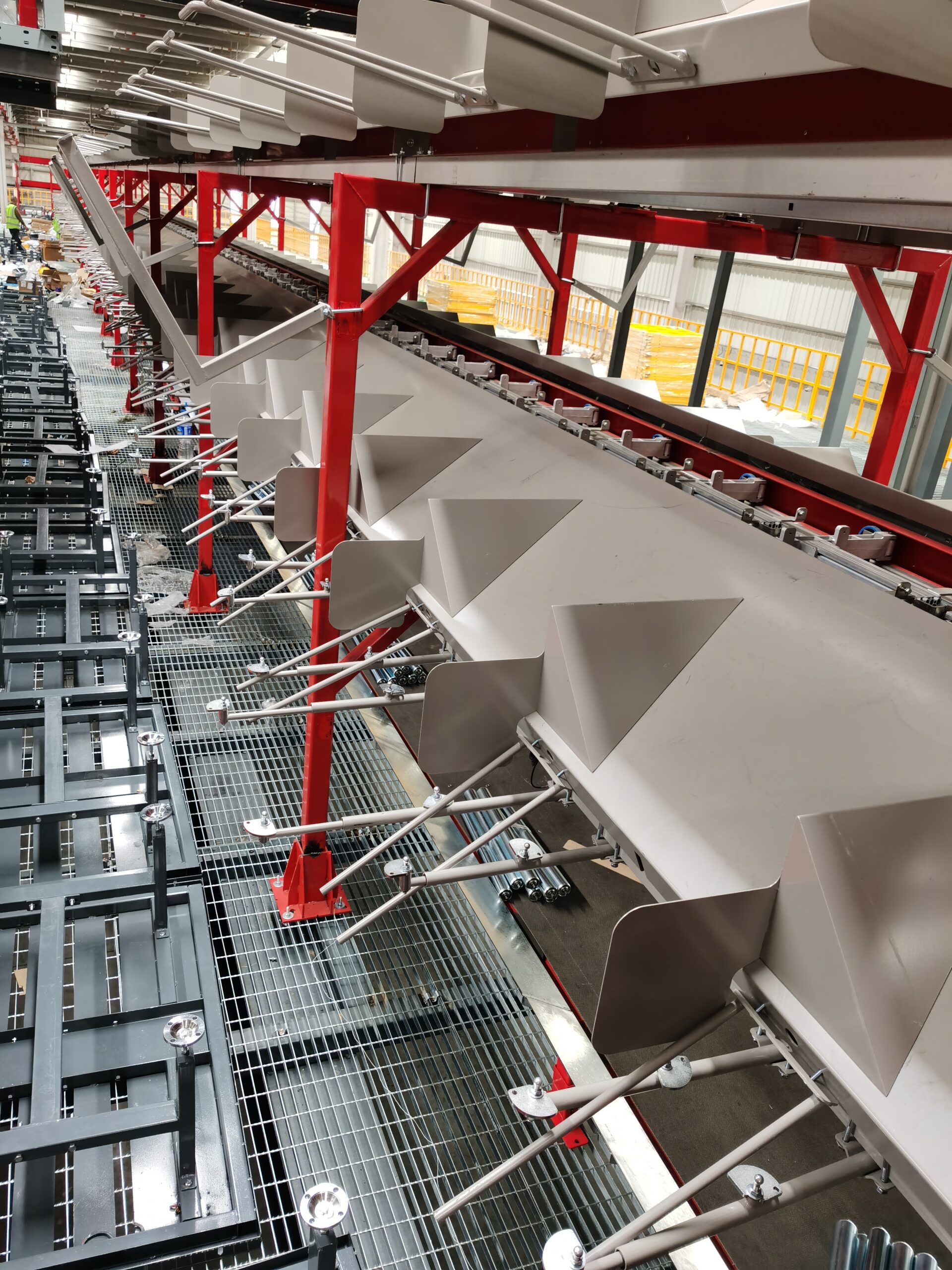
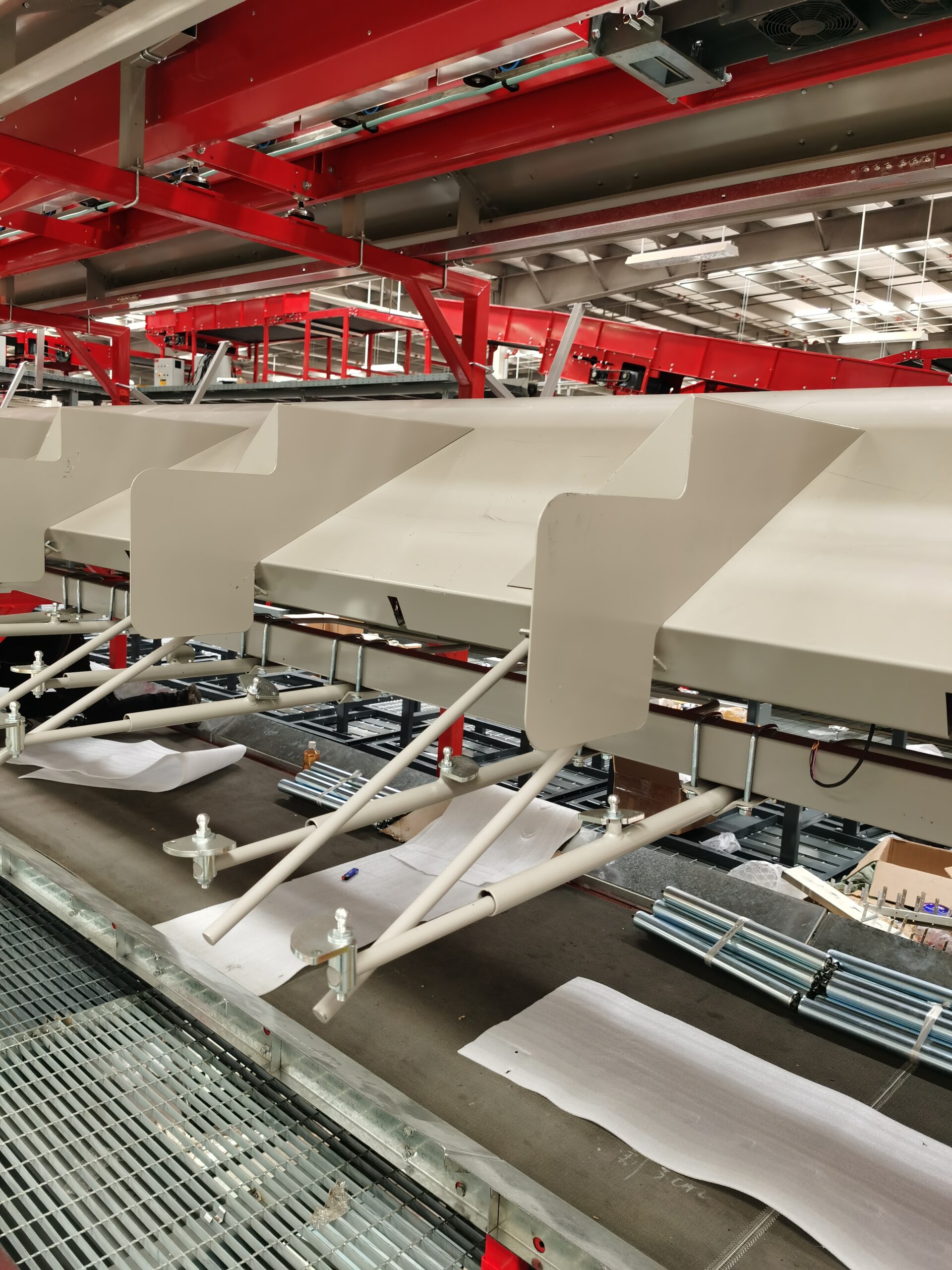
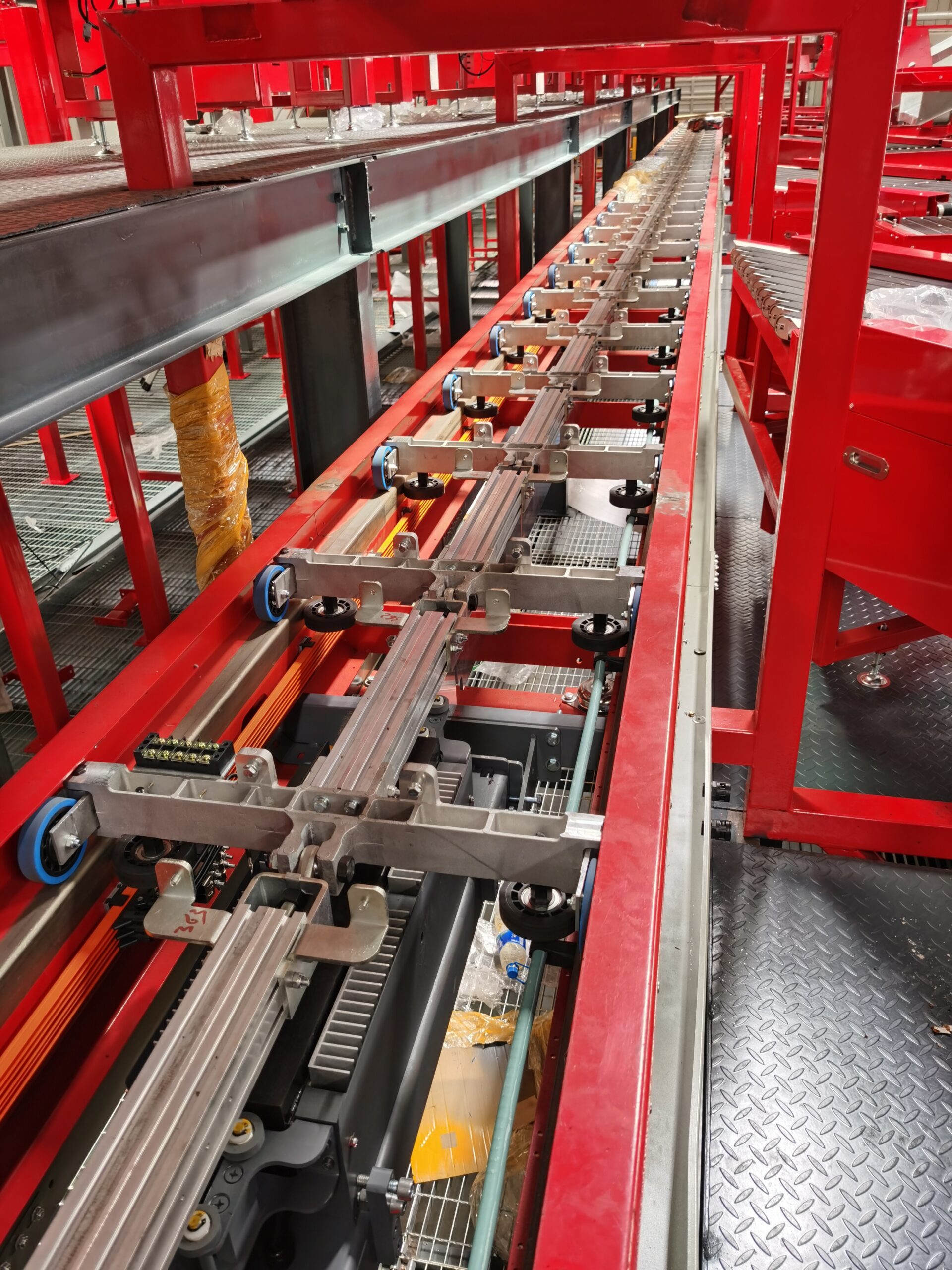
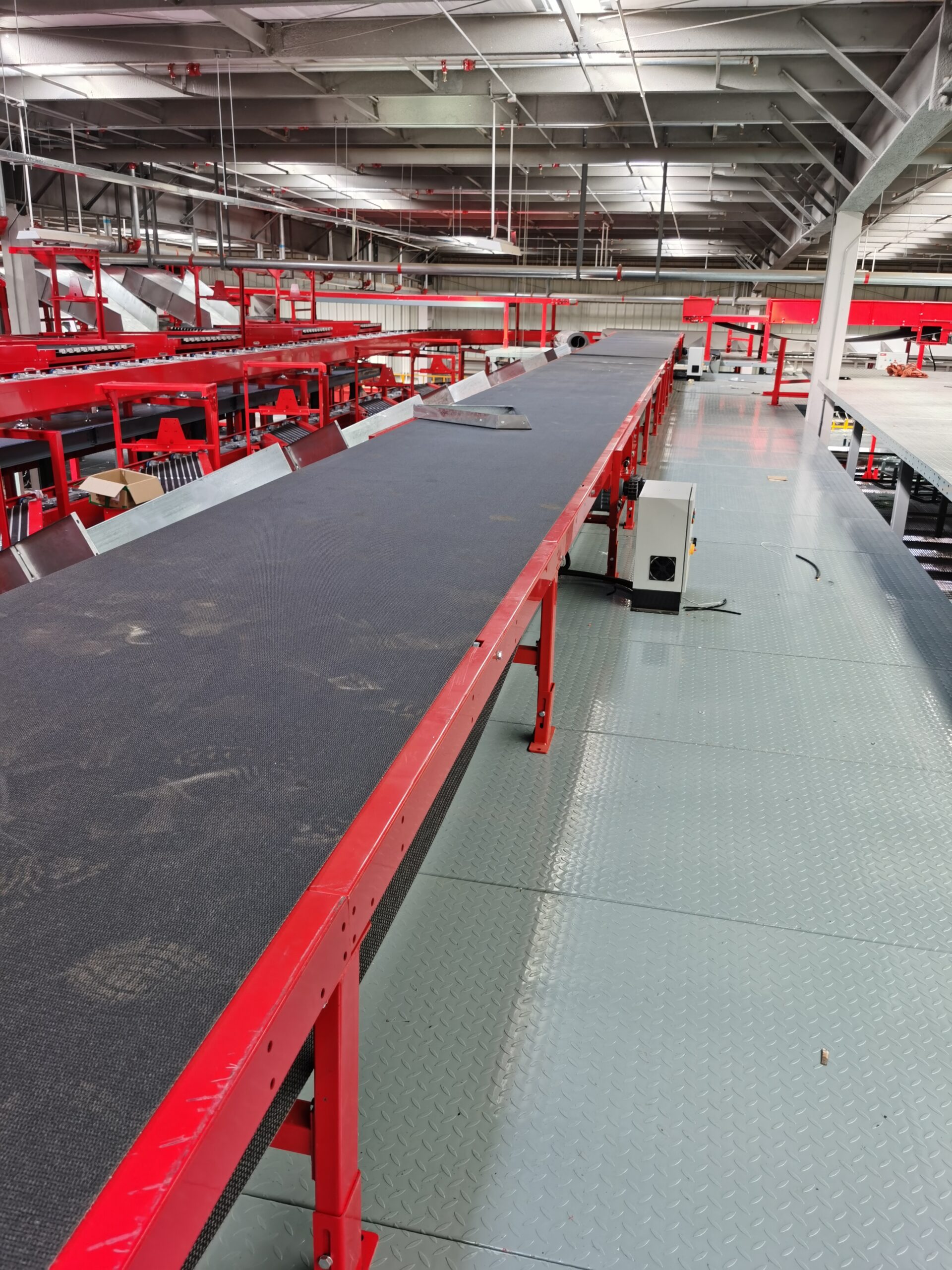
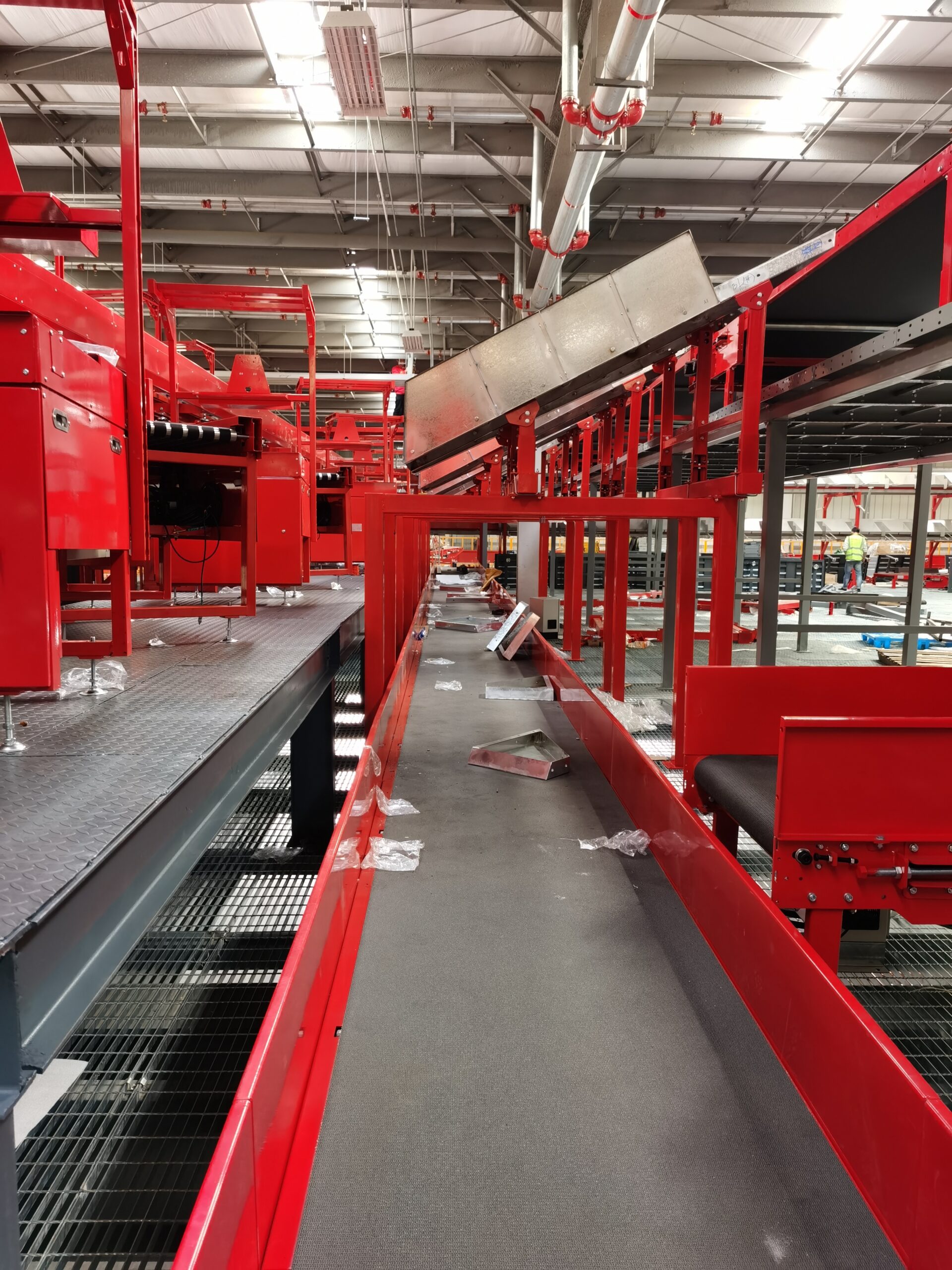
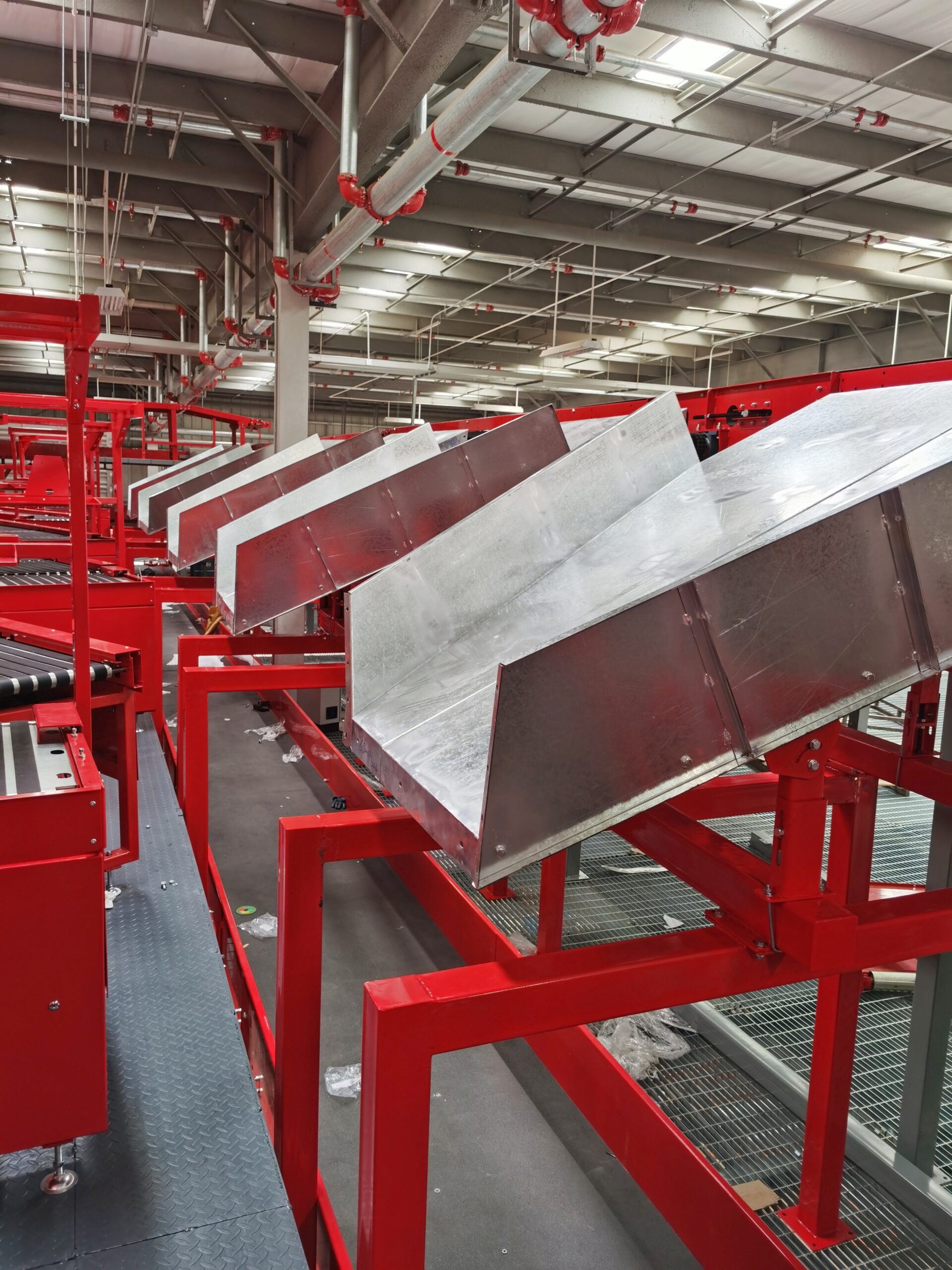
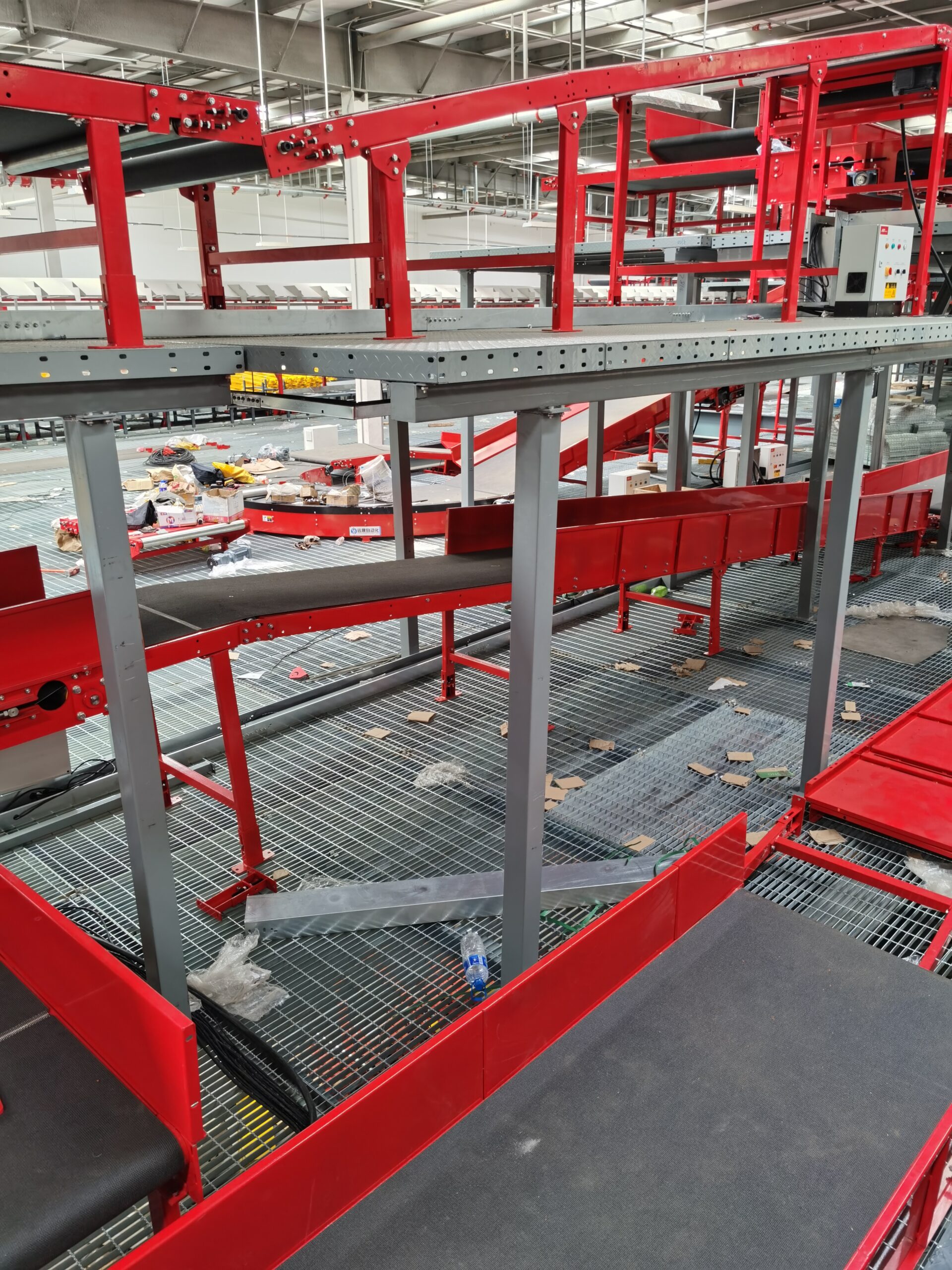
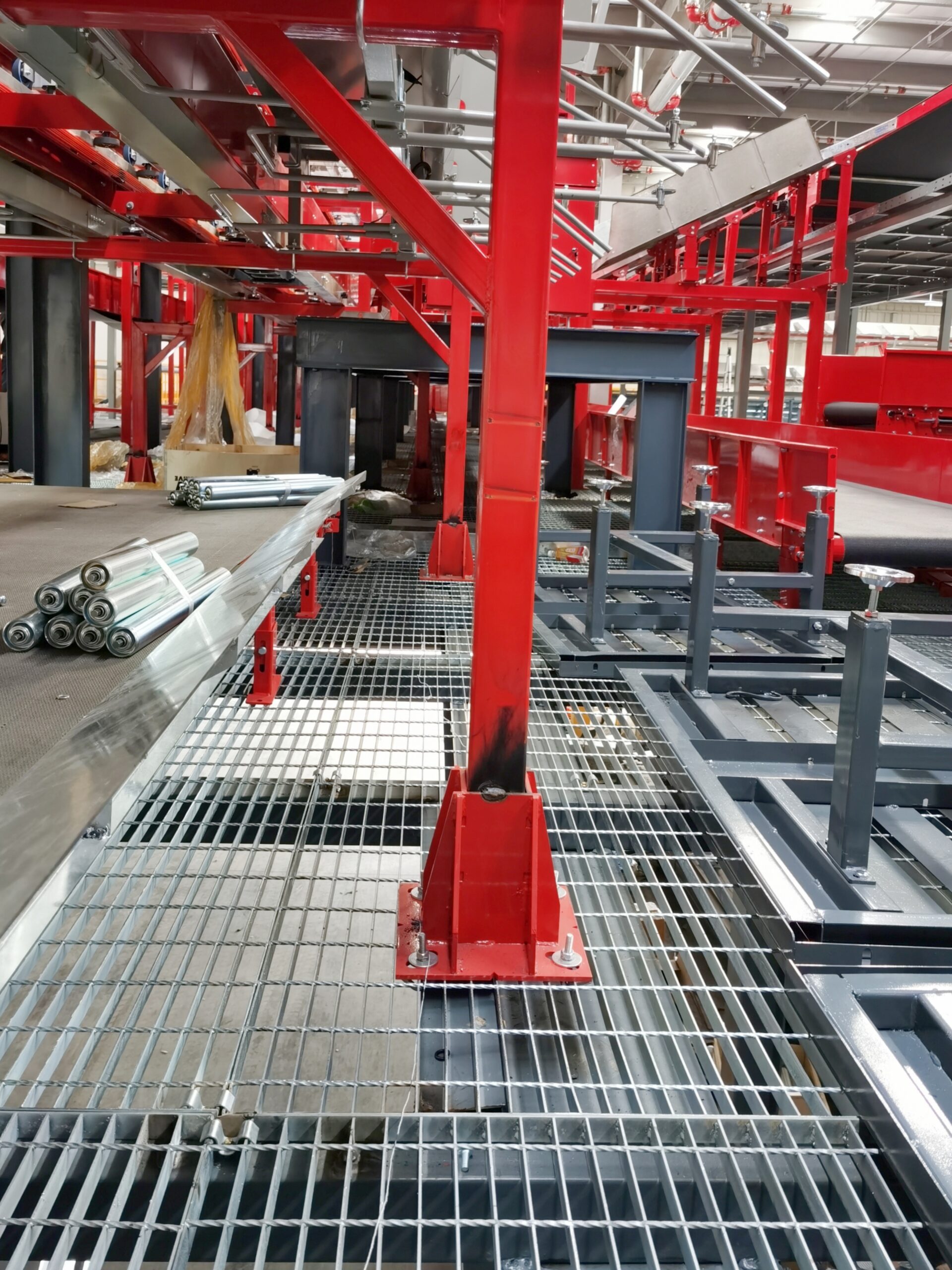
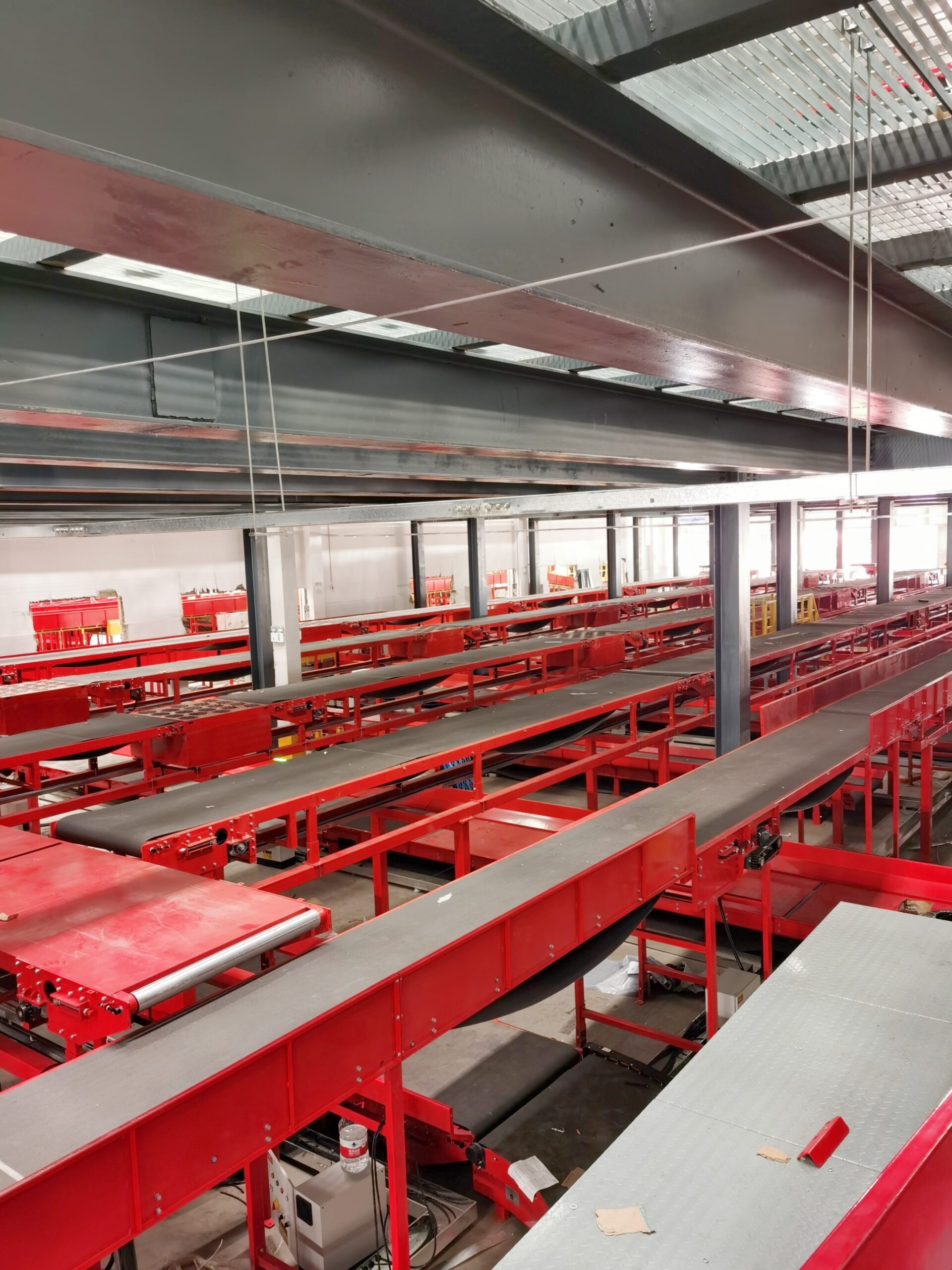
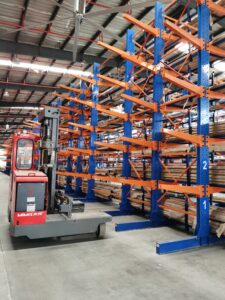
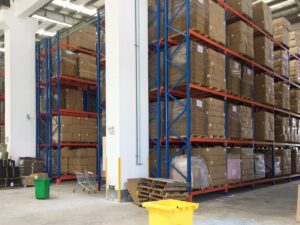
In large-scale, high-density, round-the-clock warehousing scenarios such as e-commerce logistics, express distribution hubs, and third-party logistics (3PL) warehouses, traditional manual sorting faces increasingly prominent pain points: low efficiency, high error rates, long material handling routes, and significant space waste. The heavy-duty intelligent sorting and conveying system shown in the diagram integrates precision mechanical design, modular equipment architecture, and full-process automated control technology. It delivers a comprehensive logistics sorting solution that combines storage, conveying, sorting, and buffering, providing core support for enterprises to transform toward intelligent, standardized, and highly efficient warehousing operations.
I. Core System Architecture: Deep Integration of Precision Machinery & Intelligent Control
The system is built on three core pillars: modular steel structure, high-precision conveying units, and an intelligent control center, forming a stable, efficient, and scalable logistics sorting ecosystem.
1. Modular Steel Structure System: Foundation for Heavy Loads & Precision
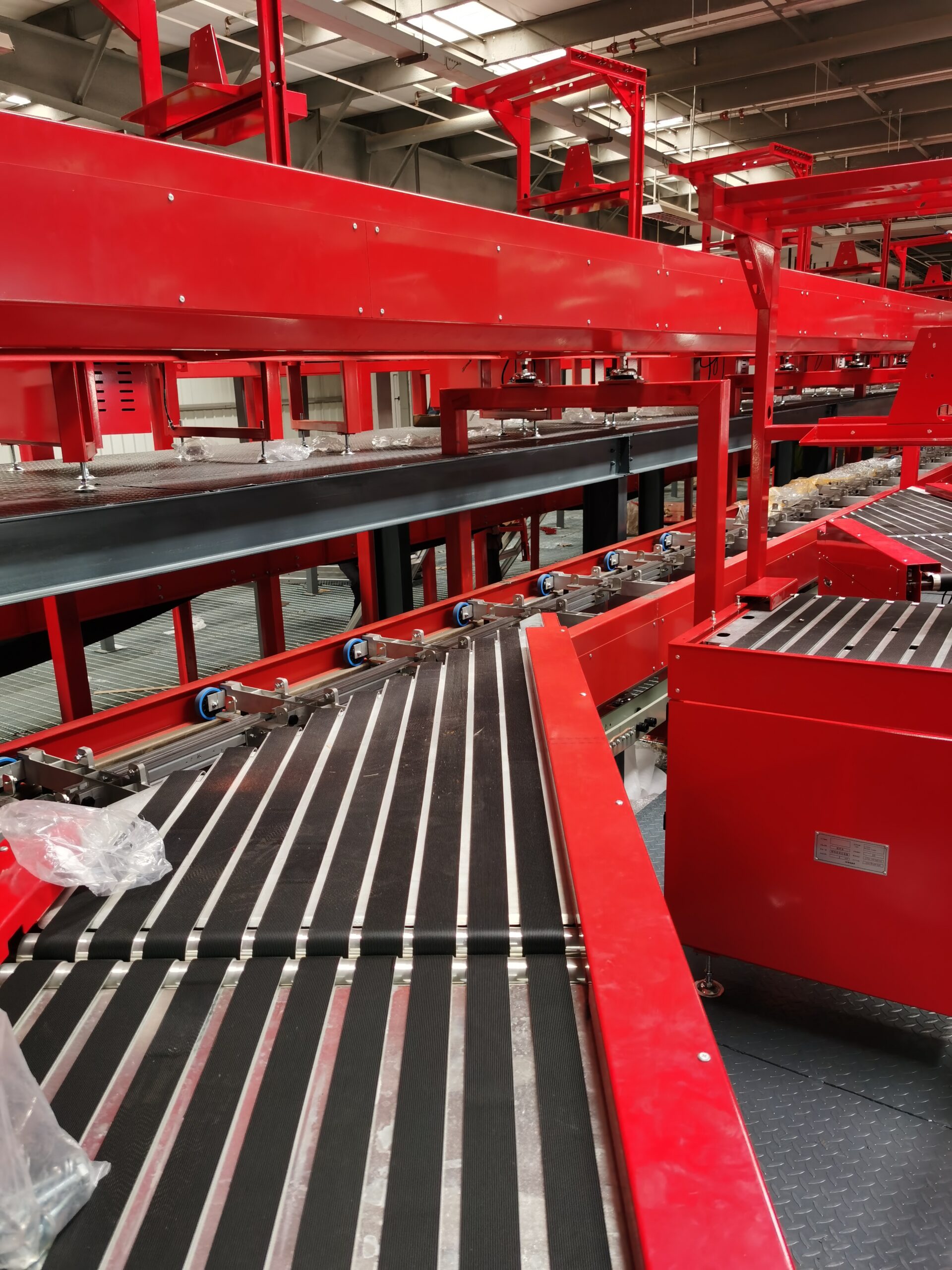
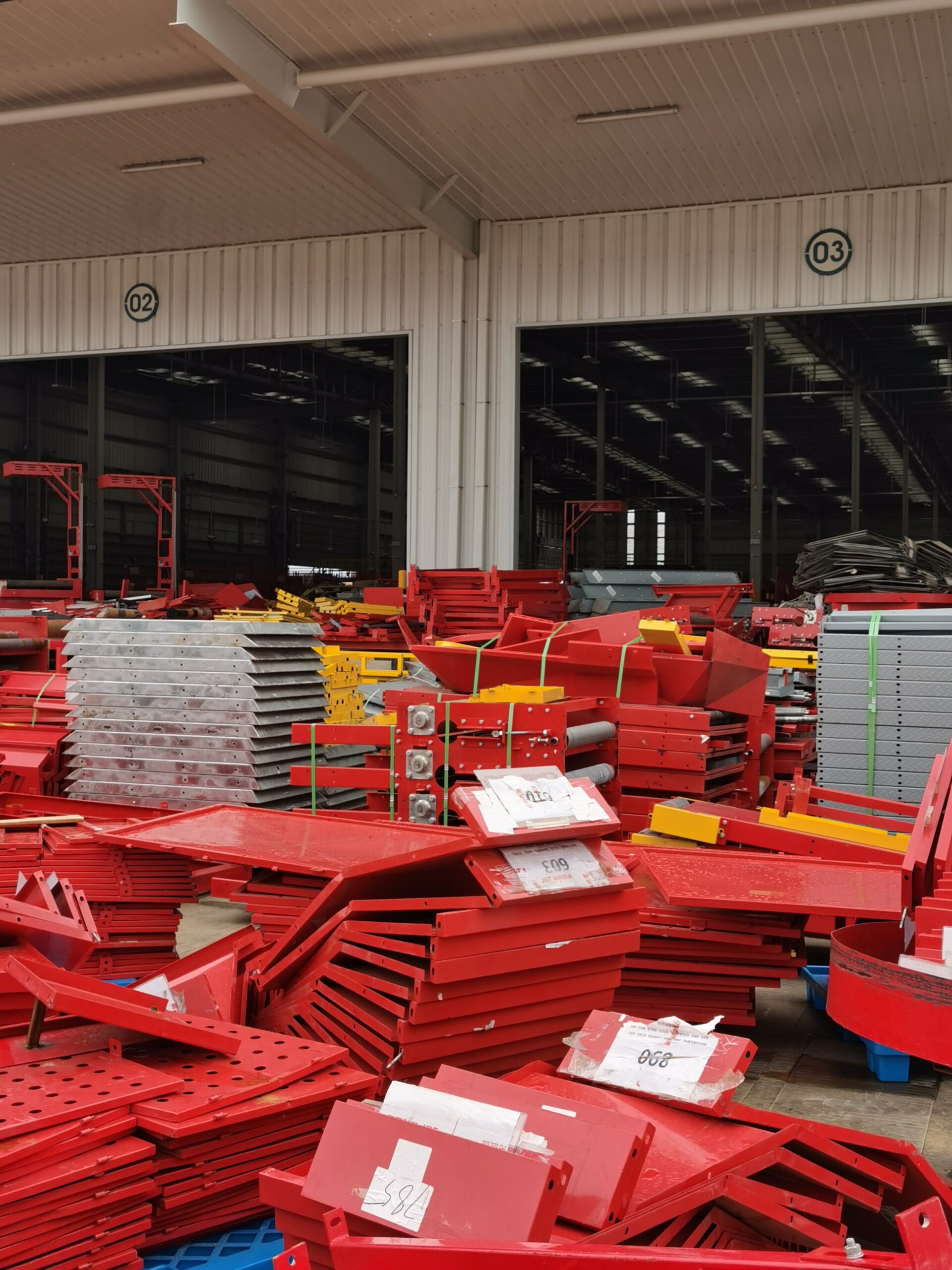
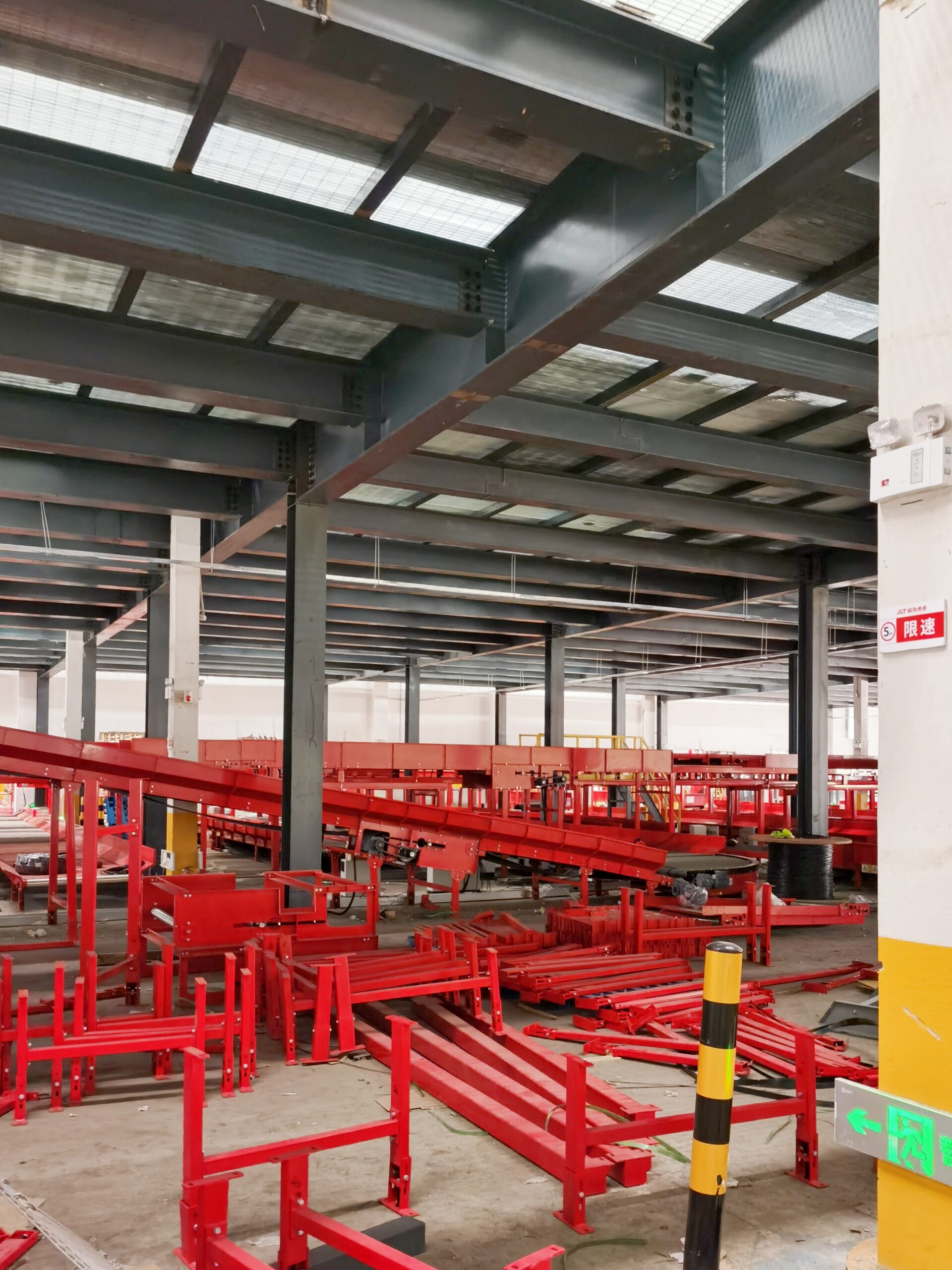
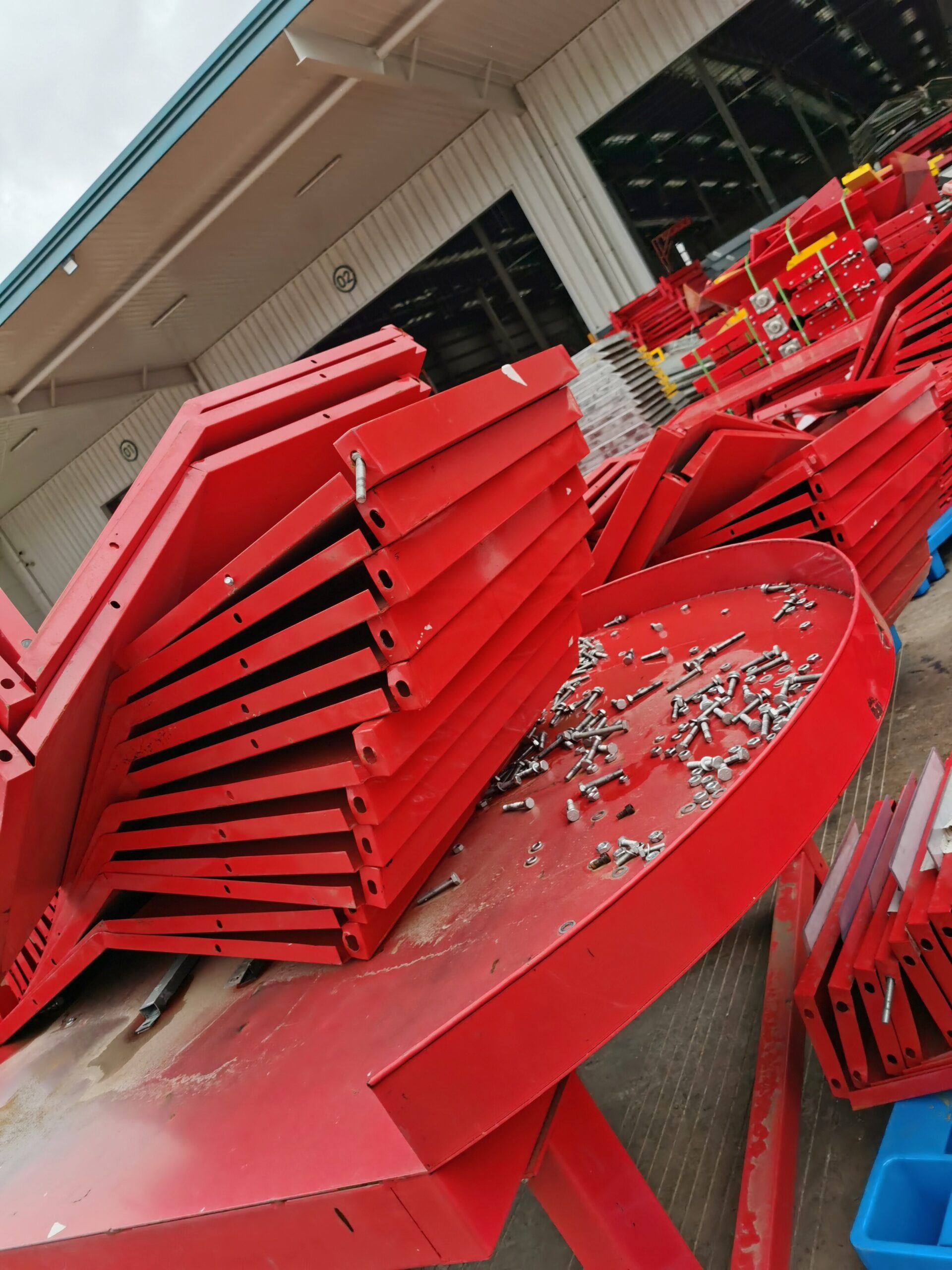
The main structure (including the red frame and steel platform shown) adopts high-strength Q235B/Q355B section steel, manufactured through precision laser cutting, CNC bending, and welding.
- High load-bearing stability: The overall frame undergoes strict mechanical load analysis and finite element (FE) simulation verification, delivering excellent bending and torsion resistance. It supports long-term stable operation of heavy-duty conveying lines and multi-layer cross layouts, with an anti-overturning coefficient meeting industrial heavy-duty standards.
- Precise assembly benchmark: Component machining hole accuracy is controlled within ±0.5mm, ensuring flat installation of conveyor guides and drive units, providing error-free reference for high-speed and stable equipment operation.
- Modular design: Key components such as uprights, beams, and legs are standardized modules. They can be flexibly added, removed, spliced, or customized in height according to site dimensions and throughput requirements, enabling flexible layouts with “multiple lines per warehouse and multi-layer three-dimensional structure”.
2. High-Precision Conveying Execution Units: Arteries of Full-Process Automation
The system includes a full range of precision conveying equipment from front-end feeding to end sorting, forming the core execution layer for automated cargo flow.
- Multi-stage chain / roller conveyors: The straight and curved conveyor sections use wear-resistant synthetic belts and precision roller drives, featuring high friction, low noise, and low wear. Roller spacing and belt tension can be adjusted for parcels of different weights and sizes, ensuring smooth movement without jamming or deviation during turning, climbing, and direction changing.
- Cross-belt / sliding sorter: As the core sorting equipment, its transmission mechanism is precision-engineered to achieve accurate diversion of parcels at high speed. Paired with intelligent sensing devices, it enables rapid parcel identification, positioning, and sorting, greatly improving throughput.
- Double-layer three-dimensional cross layout: Steel platforms support upper and lower cross-layout conveying lines, fully utilizing vertical factory space and increasing route density by 2–3 times compared with traditional flat sorting, solving space shortages in large-scale, high-flow scenarios.
3. Intelligent Control Center: Digital Brain for Warehouse Operations
The system is equipped with an industrial-grade PLC control system and IoT monitoring platform. Through sensors, encoders, and servo drive technology, it achieves end-to-end digital management.
- Precise positioning & tracking: Photoelectric sensing and visual recognition monitor the position and status of each parcel in real time, enabling full visual tracking from inbound to outbound.
- Dynamic scheduling & optimization: The system seamlessly connects with WMS (Warehouse Management System) and ERP systems, automatically optimizing sorting paths and equipment operation based on order volume and cargo attributes, supporting 24/7 uninterrupted operation.
- Fault self-diagnosis & early warning: The built-in intelligent monitoring system detects real-time operating data, providing instant alerts for abnormal vibration, temperature, and material jams, enabling predictive maintenance and greatly reducing downtime risks.
II. Core Technical Advantages: Comprehensive Upgrades for Logistics Sorting Efficiency
1. Maximized Space Efficiency
Through double / multi-layer three-dimensional layout and dense equipment arrangement, the system achieves 2–3 times the storage and sorting capacity of traditional flat sorting lines within the same footprint. This greatly reduces plant rental and construction costs, optimizes internal logistics routes, cuts unnecessary travel of forklifts and workers, and lowers overall warehousing costs by more than 40%.
2. Leapfrog Improvement in Efficiency & Accuracy
Fully automated sorting replaces manual searching, handling, and verification, improving efficiency by over 300% compared with manual operations, with a daily parcel processing capacity of hundreds of thousands. Intelligent positioning and control technology keep mis-sorting and missing rates below 0.01%, eliminating high error rates in manual sorting and enhancing customer experience.
3. Full-Scenario Adaptability & High Scalability
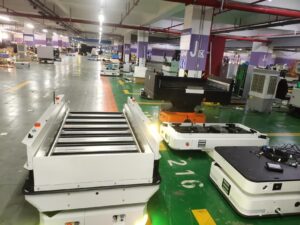
The system offers strong adaptability and scalability. It efficiently handles e-commerce parcels, express items, fresh produce, and industrial finished products through customized conveying modules and sorting strategies. It also supports seamless integration with AGVs, AS/RS, cross-belt sorters, and other intelligent equipment, enabling a smooth upgrade from semi-automation to full-intelligent warehousing and avoiding redundant investment.
4. Green Energy Saving & Low Operating Costs
Core components use energy-saving motors and wear-resistant materials, delivering low power consumption and noise within industry standards, in line with modern green warehousing concepts. Standardized modular design simplifies maintenance, repair, and replacement. Annual operating costs are only 1.5% of equipment value, significantly reducing long-term operational burdens.
III. Application Scenarios: Efficient Logistics Sorting Across Industries
1. E‑commerce & Express Logistics Centers
Ideal for peak sorting during major sales promotions. It easily handles hundreds of thousands to millions of parcels daily, with rapid sorting and dynamic scheduling that shortens order fulfillment time and ensures stable operations during peak periods.
2. 3PL & Third-Party Logistics Centers
Supports mixed sorting for multi-client, multi-category, and multi-batch operations. Refined zone management and intelligent slot allocation provide independent sorting and buffering areas for different customers, enabling professional and standardized services.
3. Manufacturing, Automotive & Electronics Warehousing
Used for automated line-side material conveying and finished goods delivery. Seamless connection between warehousing and production lines realizes full-process automated flow from raw material warehousing to production distribution and finished goods delivery, improving overall supply chain responsiveness.
4. Pharmaceutical & Cold-Chain Warehousing
For industries requiring high sorting accuracy and controlled environments, customized dust-proof, moisture-proof, and constant-temperature conveying modules ensure quality and safety of special items during sorting and transportation.
From precision modular structural design and efficient multi-layer three-dimensional conveying to intelligent full-process control, the heavy-duty intelligent sorting and conveying system stands as a core engine for modern logistics sorting center upgrading with comprehensive advantages in space, efficiency, management, and cost.
It not only resolves enterprise pain points such as difficult goods searching, slow sorting, and high costs, but also helps build efficient, intelligent, and green modern logistics systems, enabling businesses to gain a competitive edge in the fierce market.
 StorLogi